Bivalvia |
Cardiida |
Cardiidae
محیط زیست: محیط زیست / منطقه آب و هوایی / تغييرات عمق / محدوده توزیع
بوم شناسي
Benthic; تغييرات عمق 9 - 200 m (مرجع 2754). Subtropical
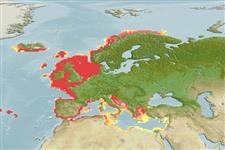
Northeast Atlantic and the Mediterranean.
طول در اولین بلوغ / اندازه / وزن / سن
بلوغ: Lm ? range ? - ? cm Max length : 7.5 cm SHL جنس نر / بدون خواص جنسي; (مرجع 2759)
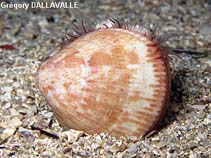
White to light yellow shell exterior with occasional dark markings; smooth shell surface; valves with 40 to 50 non-projecting or faint ribs around the center; crenulated shell margin.
Minimum depth based from occurrence (Ref. 2742); to be replaced with a better reference. Collected from the sublittoral zone, from low tide up to a depth of 200 m. It is found in substratum with generally coarse sand and gravel, often overlain with pebbles, cobbles and dead shell (Ref. 2742 and 2744). It's a sessile-burrower, suspension feeder (Ref. 96498).
چرخه زندگی و رفتار جفتگیری
بلوغ | تولید مثل | تخم ریزی | تخم ها | باروری | توزاد ( لارو)
Members of the class Bivalvia are mostly gonochoric, some are protandric hermaphrodites. Life cycle: Embryos develop into free-swimming trocophore larvae, succeeded by the bivalve veliger, resembling a miniature clam.
مآخذ اصلی
مراجع | هماهنگ كننده | همكاران
Demir, M. 2003 Shells of mollusca collected from the seas of Turkey. Turkey Journal of Zoology 27:101-140. (مرجع 2754)
وضعيت در فهرست قرمز IUCN
(مرجع 130435: Version 2025-2 (Global))
وضعيت از نظر سايتس (مرجع 108899)
Not Evaluated
Not Evaluated
خطر برای انسان ها
استفاده انسانی
ماهي گيري – شيلات: تجاري
FAO - Publication: search | FishSource | دریای اطراف ما
ابزارها
اطلاعات بيشتر
بومشناسی گرمسیریاقلام غذایی (طعمهها)
تركيب غذايي
مصرف غذايي
شکارچیان
چرخه زندگیتولید مثلبلوغباروریتخم ریزیتخم هانمو تخمتوزاد ( لارو) مرتبط با انسانتمبر، سکه، متفرقه.
منابع اينترنتي
تخمینها بر اساس مدلها
آسیبپذیری ماهیگیری
(مرجع 71543) |
Low vulnerability (10 of 100). |
طبقه قيمت
(مرجع 80766): |
Low. |
Nutrients
|
Calcium = 149 [71, 228] mg/100g; Iron = 8.53 [1.95, 15.11] mg/100g; Protein = 9.88 [8.64, 11.12] %; Omega3 = 0.313 [0.202, 0.423] g/100g; Selenium = 61 [50, 72] μg/100g; VitaminA = 0 μg/100g; Zinc = 2.04 [0.56, 3.51] mg/100g (wet weight); based on nutrient studies. |