Bivalvia |
Cardiida |
Cardiidae
পরিবেশ: পরিবেশ / জলবায়ু অঞ্চল / গভীরতার পরিসীমা / বিতরণ পরিসীমা
বাস্তুসংস্থান
Benthic; গভীরতার পরিসীমা 9 - 200 m (সূত্র 2754). Subtropical
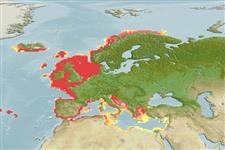
Northeast Atlantic and the Mediterranean.
প্রথম পরিপক্কতার সময় দৈর্ঘ্য / আকৃতি / ওজন / বয়স
পরিপক্কতা : Lm ? range ? - ? cm Max length : 7.5 cm SHL পুরুষ/ লিঙ্গ অনিধর্ারিত ; (সূত্র 2759)
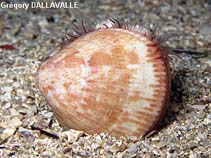
White to light yellow shell exterior with occasional dark markings; smooth shell surface; valves with 40 to 50 non-projecting or faint ribs around the center; crenulated shell margin.
Minimum depth based from occurrence (Ref. 2742); to be replaced with a better reference. Collected from the sublittoral zone, from low tide up to a depth of 200 m. It is found in substratum with generally coarse sand and gravel, often overlain with pebbles, cobbles and dead shell (Ref. 2742 and 2744). It's a sessile-burrower, suspension feeder (Ref. 96498).
জীবনচক্র এবং প্রজনন আচরণ
পরিপক্কতা | প্রজনন | ডিম ছাড়া | ডিমসমূহ | ডিম্বধারন ক্ষমতা | শুককীট
Members of the class Bivalvia are mostly gonochoric, some are protandric hermaphrodites. Life cycle: Embryos develop into free-swimming trocophore larvae, succeeded by the bivalve veliger, resembling a miniature clam.
Demir, M. 2003 Shells of mollusca collected from the seas of Turkey. Turkey Journal of Zoology 27:101-140. (সূত্র 2754)
আইইউসিএন রেড লিস্টের অবস্থা
(সূত্র 130435: Version 2025-2 (Global))
CITES অবস্থা (সূত্র 108899)
Not Evaluated
Not Evaluated
মানুষের জন্য হুমকি
মানুষের ব্যবহার
মৎস্য: বাণিজ্যিক
FAO - Publication: search | FishSource | আমাদের চতুর্পাশ্বের সাগর
হাতিয়ার
আরো তথ্য
ট্রফিক বাস্তুতন্ত্র খাদ্যদ্রব্য (শিকার)
পথ্য উপাদান
খাদ্য গ্রহণ
শিকারী প্রাণী সমূহ
জীবনচক্রপ্রজনন পরিপক্কতা ডিম্বধারন ক্ষমতা ডিম ছাড়া ডিমসমূহডিমের বিকাশশুককীট শারীরবিদ্যাঅম্লজান ব্যবহার
মানব সম্পর্কিতডাকটিকিট, মুদ্রা, বিবিধ।
ইন্টারনেট সুত্র
মডেলের উপর ভিত্তি করে অনুমান
মাছ ধরার ঝুঁকিপূর্ণতা
(সূত্র 71543) |
Low vulnerability (10 of 100). |
মূল্য বিভাগ
(সূত্র 80766): |
Low. |
Nutrients
|
Calcium = 149 [71, 228] mg/100g; Iron = 8.53 [1.95, 15.11] mg/100g; Protein = 9.88 [8.64, 11.12] %; Omega3 = 0.313 [0.202, 0.423] g/100g; Selenium = 61 [50, 72] μg/100g; VitaminA = 0 μg/100g; Zinc = 2.04 [0.56, 3.51] mg/100g (wet weight); based on nutrient studies. |