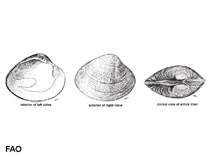
Bivalvia |
Venerida |
Veneridae
পরিবেশ: পরিবেশ / জলবায়ু অঞ্চল / গভীরতার পরিসীমা / বিতরণ পরিসীমা
বাস্তুসংস্থান
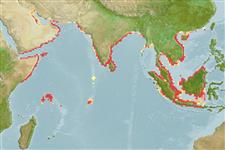
Benthic; ঈষৎ লোনা ; গভীরতার পরিসীমা 0 - 20 m (সূত্র 348). Tropical; 31°N - 9°S, 44°E - 118°E
Indo-Pacific: from northwest Indian Ocean and the Aden Gulf to Indonesia.
প্রথম পরিপক্কতার সময় দৈর্ঘ্য / আকৃতি / ওজন / বয়স
পরিপক্কতা : Lm ? range ? - ? cm Max length : 6.5 cm SHL পুরুষ/ লিঙ্গ অনিধর্ারিত ; (সূত্র 348); common length : 5.0 cm SHL পুরুষ/ লিঙ্গ অনিধর্ারিত ; (সূত্র 348); সর্বোচ্চ উলি্ল্লখিত বয়স : 3.00 বৎসর (সূত্র 8702)
Depth range is based on ecology (Ref. 348); to be replaced wtith a better reference. Primarily marine but also invades backwaters and estuaries (Ref. 105059). Found in protected coastal areas, with shallow subtidal waters (Ref. 348). In muddy and sandy substrates (Ref. 105057) where it burrows (Ref. 105059). Family is known to be suspension feeders, filtering planktonic algae and organic matter from the water (Ref. 348).
জীবনচক্র এবং প্রজনন আচরণ
পরিপক্কতা | প্রজনন | ডিম ছাড়া | ডিমসমূহ | ডিম্বধারন ক্ষমতা | শুককীট
Members of the class Bivalvia are mostly gonochoric, some are protandric hermaphrodites. Life cycle: Embryos develop into free-swimming trocophore larvae, succeeded by the bivalve veliger, resembling a miniature clam.
Poutiers, J.M. 1998 Bivalves. Acephala, Lamellibranchia, Pelecypoda. p. 123-362. In Carpenter, K. E. and V. H. Niem. 1998. FAO species identification guide for fishery purposes. The living marine resources of the Western Central Pacific. Volume 1. Seaweeds, corals, bivalves, and gastropods. Rome, FAO. (সূত্র 348)
আইইউসিএন রেড লিস্টের অবস্থা
(সূত্র 130435: Version 2025-2 (Global))
CITES অবস্থা (সূত্র 108899)
Not Evaluated
Not Evaluated
মানুষের জন্য হুমকি
Harmless
মানুষের ব্যবহার
FAO - Publication: search | FishSource |
হাতিয়ার
আরো তথ্য
জনসংখ্যার গতিশীলতাবৃদ্ধিসর্বোচ্চ বয়স / আকারদৈর্ঘ্য-ওজন সম্পর্ক।দৈর্ঘ্য-দৈর্ঘ্য rel.দৈর্ঘ্য-ফ্রিকোয়েন্সিগণ রূপান্তরপ্রাচুর্য জীবনচক্রপ্রজনন পরিপক্কতা ডিম্বধারন ক্ষমতা ডিম ছাড়া ডিমসমূহডিমের বিকাশশুককীট শারীরবিদ্যাঅম্লজান ব্যবহার
মানব সম্পর্কিতডাকটিকিট, মুদ্রা, বিবিধ।
ইন্টারনেট সুত্র
মডেলের উপর ভিত্তি করে অনুমান
মাছ ধরার ঝুঁকিপূর্ণতা
(সূত্র 71543) |
Low vulnerability (16 of 100). |
মূল্য বিভাগ
(সূত্র 80766): |
Medium. |