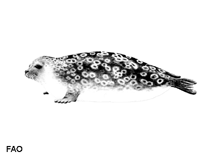
Mammalia |
Carnivora |
Phocidae
Ambiente: milieu / zona climatica / distribuzione batimetrica / gamma di distribuzione
Ecologia
Batidemersale. Polar; 90°N - 0°S, 180°W - 180°E
Northeast Atlantic, Atlantic Ocean, Pacific Ocean and the Arctic: Svalbard, Hudson Bay and Strait (Canada), Bering and Baltic Seas (Ref. 1394). Pusa hispida hispida: Arctic Ocean, Bering Sea, North Pole, James Bay and Baffin Island (Nunavut), Strait of Belle Isle (Newfoundland), Greenland, Barents Sea, Norway, White Sea, Kamchatka, Bristol Bay in Alaska, and vagrant to Azores, Germany, Portugal, New Jersey, Southern California; Pusa hispida botnica: Baltic Sea, Gulf of Bothnia and Finland, Sweden, Latvia; Pusa hispida ladogensis: Russia, Gulf of Finland, Lake Ladoga, White Sea; Pusa hispida saimensis: Finland; Pusa hispida ochotensis: Sea of Okhotsk, Japan, Russia, Kamchatka, and vagrant to Jiangsu, China (Ref. 1522). Climate: Circumpolar, subtropical, boreal.
Lunghezza alla prima maturità / Dimensione / Peso / Età
Maturità: Lm ? range ? - ? cm Max length : 165 cm TL maschio/sesso non determinato; (Fonte Biblio. 1394); peso massimo pubblicato: 110.0 kg (Fonte Biblio. 1394)
Feeds on fishes and planktonic crustaceans (Ref. 1394). Incidental injuries and death of this species are caused by commercial fishing gears, i.e., flatfish trawl, pollock trawl, cod trawl, and cod longline (Ref. 118427). Typically stays in ice-covered waters year-round (Ref. 117965). Feeds on fishes (Ref. 1394) and planktonic crustaceans like pelagic amphipods and mysids (Ref. 117965).
Ciclo vitale e comportamento di accoppiamento
Maturità | Riproduzione | Deposizione | Uova | Fecondità | Larve
Jefferson, T.A., S. Leatherwood and M.A. Webber 1993 FAO species Identification Guide: Marine Mammals of the World. Rome, FAO. 320 p. + 587 figures. (Fonte Biblio. 1394)
Stato della Lista Rossa IUCN
(Fonte Biblio. 130435: Version 2025-2 (Global))
Stato della CITES (Fonte Biblio. 108899)
Not Evaluated
CMS (Fonte Biblio. 116361)
Not Evaluated
Minaccia per l'uomo
Usi umani
Pesca: commerciale
FAO - pesca: profilo della specie, landings search; Publication: search | FishSource | Sea Around Us
Strumenti
Informazioni ulteriori
Dinamica della popolazione Ciclo di vitaRiproduzioneMaturitàFeconditàDeposizioneUovaSviluppo delle uovaLarve FisiologiaConsumo di ossigeno
Legato all'uomoFrancobolli, monete, materiale vario.
Fonti Internet
Stime basate su modelli
Resilienza
(Ref. 69278): |
Medio, tempo minimo di raddoppiamento della popolazione 1.4 - 4.4 anni (K=0.08-0.43) |
Vulnerabilità della pesca
(Fonte Biblio. 71543) |
High to very high vulnerability (75 of 100). |
Categoria di prezzo
(Fonte Biblio. 80766): |
Unknown. |