Mammalia |
Cetartiodactyla |
Balaenopteridae
Miljö: miljö / Klimatzon / djupintervall / distributionsområde
Ekologi
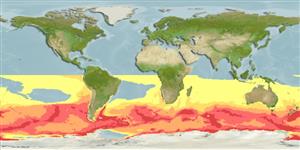
Pelagic-oceanic. Polar; 0°N - 90°S, 180°W - 180°E
Indo-Pacific, Atlantic Ocean and the Antarctic. Polar, tropical.
Längd vid första mognad / Storlek / Vikt / Ålder
Könsmognad: Lm ? range ? - ? cm Max length : 840 cm TL hane/ej könsbestämd; (Ref. 79551); 890 cm TL (female); publicerad maxvikt: 6.8 t (Ref. 79551); publicerad maxvikt: 6.8 t
Feeds mainly on krill offshore; and other prey items such as amphipods and fish. Their prey species varies geographically. Reports suggests a bimodal diurnal feeding rhythm with a primary peak in the early morning and a secondary one in the late evening. It takes 8 hours to digest their stomach contents (Ref. 79551).
Livscykel och parningsbeteende
Könsmognad | Reproduktion | Lek | Ägg | Fekunditet | Larver
Rice, D.W. 1998 Marine Mammals of the World Systematics and Distribution. Special Publication number 4: The Society for Marine Mammalogy. 231p. (Ref. 1522)
Status på IUCN:s rödlista
(Ref. 130435: Version 2025-2 (Global))
CITES-status (Ref. 108899)
Hot mot människor
Mänskliga användningsområden
Fiskeri: kommersiell
FAO - Publication: search | FishSource | Havet omkring oss
Verktyg
Ytterligare information
MänniskorelateradFrimärken, mynt, diverse.
Internet-källor
Uppskattningar baserade på modeller
Sårbarhet i fisket
(Ref. 71543) |
Very high vulnerability (80 of 100). |
Priskategori
(Ref. 80766): |
Unknown. |