Mammalia |
Cetartiodactyla |
Balaenopteridae
Milieu: milieu / Klimaatzone / Diepte / verspreidingsgebied
Ecologie
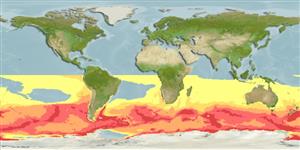
Pelagic-oceanic. Polar; 0°N - 90°S, 180°W - 180°E
Indo-Pacific, Atlantic Ocean and the Antarctic. Polar, tropical.
Lengte bij maturiteit / Grootte / Gewicht / Leeftijd
Maturiteit: Lm ? range ? - ? cm Max length : 840 cm TL mannelijk / geslacht onbekend; (Ref. 79551); 890 cm TL (female); max. gepubliceerd gewicht: 6.8 t (Ref. 79551); max. gepubliceerd gewicht: 6.8 t
Feeds mainly on krill offshore; and other prey items such as amphipods and fish. Their prey species varies geographically. Reports suggests a bimodal diurnal feeding rhythm with a primary peak in the early morning and a secondary one in the late evening. It takes 8 hours to digest their stomach contents (Ref. 79551).
Levenscyclus en paargedrag
Maturiteit | Voortplanting | Paaien | Eieren | Fecunditeit | Larven
Rice, D.W. 1998 Marine Mammals of the World Systematics and Distribution. Special Publication number 4: The Society for Marine Mammalogy. 231p. (Ref. 1522)
Status op de Rode Lijst van het IUCN
(Ref. 130435: Version 2025-2 (Global))
CITES status (Ref. 108899)
Gevaar voor de mens
Gebruik door de mens
Visserij: commercieel
FAO - Publication: search | FishSource | Sea Around Us
Tools
Meer informatie
FysiologieZuurstofverbruik
Menselijk gerelateerdPostzegels, munten, diversen.
Internetbronnen
Schattingen op basis van modellen
Kwetsbaarheid van de visserij
(Ref. 71543) |
Very high vulnerability (80 of 100). |
Prijsklasse
(Ref. 80766): |
Unknown. |