Mammalia |
Cetartiodactyla |
Balaenopteridae
Ambiente: milieu / zona climática / intervalo de profundidade / gama de distribuição
Ecologia
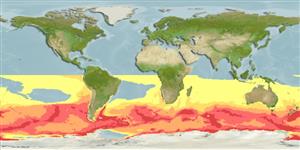
Pelagic-oceanic. Polar; 0°N - 90°S, 180°W - 180°E
Indo-Pacific, Atlantic Ocean and the Antarctic. Polar, tropical.
Comprimento na primeira maturidade / Tamanho / Peso / Idade
Maturidade: Lm ? range ? - ? cm Max length : 840 cm TL macho/indeterminado; (Ref. 79551); 890 cm TL (female); peso máx. Publicado: 6.8 t (Ref. 79551); peso máx. Publicado: 6.8 t
Feeds mainly on krill offshore; and other prey items such as amphipods and fish. Their prey species varies geographically. Reports suggests a bimodal diurnal feeding rhythm with a primary peak in the early morning and a secondary one in the late evening. It takes 8 hours to digest their stomach contents (Ref. 79551).
Ciclo de vida e comportamento de acasalamento
Maturidade | Reprodução | Desova | Ovos | Fecundidade | Larvas
Rice, D.W. 1998 Marine Mammals of the World Systematics and Distribution. Special Publication number 4: The Society for Marine Mammalogy. 231p. (Ref. 1522)
Categoria na Lista Vermelha da IUCN
(Ref. 130435: Version 2025-2 (Global))
Categoria CITES (Ref. 108899)
Ameaça para o homem
Utilização humana
Pescarias: espécies comerciais
FAO - Publication: search | FishSource | Sea Around Us
Ferramentas
Mais informação
FisiologiaConsumo de oxigénio
Relacionado com o ser humanoSelos, moedas, diversos.
Fontes da internet
Estimativas baseadas em modelos
Vulnerabilidade da pesca
(Ref. 71543) |
Very high vulnerability (80 of 100). |
Categoria de preço
(Ref. 80766): |
Unknown. |