Malacostraca |
Decapoda |
Astacidae
محیط زیست: محیط زیست / منطقه آب و هوایی / تغييرات عمق / محدوده توزیع
بوم شناسي
Benthic; آب شيرين. Temperate
Europe inland waters: northern and eastern Europe, including portions of France eastward to countries of the Russian Commonwealth and southern Scandinavia southward. Absent from the Italian and Balkan Peninsulas. Introduced to various parts of Europe, Western Asia and North Africa.
طول در اولین بلوغ / اندازه / وزن / سن
بلوغ: Lm ? range ? - ? cm Max length : 25.0 cm TL جنس نر / بدون خواص جنسي; (مرجع 127977)
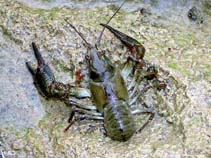
Typically brown or green on the back, underside of first pair of claws dark red or reddish brown.
First crayfish species to be described in 1758; important species in European fisheries for centuries. Occurs in a wide variety of habitats, from streams and rivers to lakes, usually in well-oxygenated waters with sufficient foliage cover. An opportunistic feeder on living and dead plant and animal matter. Mating usually in autumn, eggs are carried over winter and hatching occurs in spring and summer. Most native European populations were decimated by the crayfish plague, first detected in Italy in the 1860s. Introduced North American spinycheek crayfish, Orconectes limosus (to replace stocks of decimated population of noble crayfish in the Oder River, Germany in 1890) and other introduced crayfish species competing with and displacing native noble crayfish populations coupled with habitat destruction and pollution contributed to the decline in noble crayfish populations in Europe. Protected under the European Union Habitats Directive (Ref. 80793). Occurs in a wide variety of habitats, from streams and rivers to lakes, usually in well-oxygenated waters with sufficient foliage cover (daytime retreat under rocky or woody debris and dense foliage); also burrows on stream banks. An opportunistic feeder on living and dead plant and animal matter. Living aquatic insects, crustaceans, worms, sponges, bryozoans and mollusks are preferred with the crayfish crushing prey with their lower jaws. Birds, mammals and fish prey on the noble crayfish (Ref. 80788).
چرخه زندگی و رفتار جفتگیری
بلوغ | تولید مثل | تخم ریزی | تخم ها | باروری | توزاد ( لارو)
مآخذ اصلی
مراجع | هماهنگ كننده | همكاران
Hildyard, A. and M. Cavendish 2001 Endangered Wildlife and Plants of the World. Marshall Cavendish Corporation, NY, USA. 1872 p. (مرجع 80788)
وضعيت در فهرست قرمز IUCN
(مرجع 130435: Version 2025-2 (Global))
وضعيت از نظر سايتس (مرجع 108899)
Not Evaluated
Not Evaluated
خطر برای انسان ها
Harmless
استفاده انسانی
ماهي گيري – شيلات: تجاري; آبزي پروري: آزمايشي
FAO - Aquaculture Systems: production searchماهي گيري – شيلات: landings search; Publication: search | FishSource | دریای اطراف ما
ابزارها
اطلاعات بيشتر
مرتبط با انسانتمبر، سکه، متفرقه.
منابع اينترنتي
تخمینها بر اساس مدلها
آسیبپذیری ماهیگیری
(مرجع 71543) |
Low vulnerability (15 of 100). |
طبقه قيمت
(مرجع 80766): |
Unknown. |