Mammalia |
Cetartiodactyla |
Delphinidae
Environment: milieu / climate zone / depth range / distribution range
Ecology
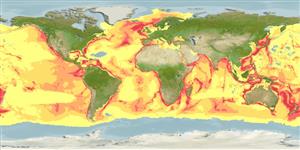
Pelagic; oceanodromous (Ref. 75906); brackish; depth range 0 - 3510 m (Ref. 116169). Tropical; 13°C - 28°C (Ref. 75906); 90°N - 90°S, 180°W - 180°E
Atlantic, the Mediterranean, Indo-Pacific and the Antarctic. Tropical to temperate.
Length at first maturity / Size / Weight / Age
Maturity: Lm ? range ? - ? cm Max length : 380 cm TL male/unsexed; (Ref. 1394); max. published weight: 500.0 kg (Ref. 1394)
Inhabits deep oceanic and continental slope waters of the tropics through the temperate regions in both hemispheres. Feeds in deeper waters (Ref. 122680) on crustaceans and cephalopods, but prefers squid (Ref. 1394). Feeding strategy involves synchronized, individual hunting for non-schooling prey such as deep-sea squids (Ref. 130961).
Life cycle and mating behavior
Maturity | Reproduction | Spawning | Eggs | Fecundity | Larvae
Breeding is year-round.
Tan, J.M.L. 1995 A Field Guide to the Whales and Dolphins in the Philippines. Makati City: Bookmark. 125 p. (Ref. 936)
IUCN Red List Status
(Ref. 130435: Version 2025-2 (Global))
CITES status (Ref. 108899)
Threat to humans
Human uses
Fisheries: commercial
FAO - Fisheries: species profile, landings search; Publication: search | FishSource | Sea Around Us
Tools
More information
PhysiologyOxygen consumption
Human RelatedStamps, coins, misc.
Internet sources
Estimates based on models
Resilience
(Ref. 69278): |
High, minimum population doubling time less than 15 months (K=0.49-0.57; tm=11) |
Fishing Vulnerability
(Ref. 71543) |
High to very high vulnerability (69 of 100). |
Price category
(Ref. 80766): |
Unknown. |