Mammalia |
Cetartiodactyla |
Delphinidae
Milieu: milieu / Klimaatzone / Diepte / verspreidingsgebied
Ecologie
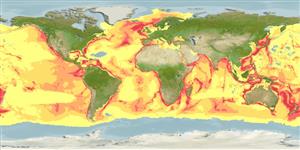
Pelagisch; oceanodroom (Ref. 75906); brak water; diepte 0 - 3510 m (Ref. 116169). Tropical; 13°C - 28°C (Ref. 75906); 90°N - 90°S, 180°W - 180°E
Atlantic, the Mediterranean, Indo-Pacific and the Antarctic. Tropical to temperate.
Lengte bij maturiteit / Grootte / Gewicht / Leeftijd
Maturiteit: Lm ? range ? - ? cm Max length : 380 cm TL mannelijk / geslacht onbekend; (Ref. 1394); max. gepubliceerd gewicht: 500.0 kg (Ref. 1394)
Inhabits deep oceanic and continental slope waters of the tropics through the temperate regions in both hemispheres. Feeds in deeper waters (Ref. 122680) on crustaceans and cephalopods, but prefers squid (Ref. 1394). Feeding strategy involves synchronized, individual hunting for non-schooling prey such as deep-sea squids (Ref. 130961).
Levenscyclus en paargedrag
Maturiteit | Voortplanting | Paaien | Eieren | Fecunditeit | Larven
Breeding is year-round.
Tan, J.M.L. 1995 A Field Guide to the Whales and Dolphins in the Philippines. Makati City: Bookmark. 125 p. (Ref. 936)
Status op de Rode Lijst van het IUCN
(Ref. 130435: Version 2025-2 (Global))
CITES status (Ref. 108899)
Gevaar voor de mens
Gebruik door de mens
Visserij: commercieel
FAO - visserij: soortsprofiel, landings search; Publication: search | FishSource | Sea Around Us
Tools
Meer informatie
FysiologieZuurstofverbruik
Menselijk gerelateerdPostzegels, munten, diversen.
Internetbronnen
Schattingen op basis van modellen
Weerstandsvermogen
(Ref. 69278): |
Hoog, minimale populatieverdubbelingstijd minder dan 15 maanden (K=0.49-0.57; tm=11) |
Kwetsbaarheid van de visserij
(Ref. 71543) |
High to very high vulnerability (69 of 100). |
Prijsklasse
(Ref. 80766): |
Unknown. |