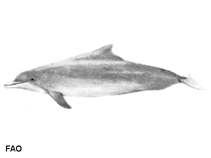
Mammalia |
Cetartiodactyla |
Delphinidae
Environnement : milieu / zone climatique / profondeur / gamme de distribution
Écologie
Pelagic-oceanic; amphidrome (Réf. 75906); saumâtre; profondeur 0 - 500 m, usually 1 - 100 m. Tropical; 90°N - 90°S, 18°E - 155°E
Indo-West Pacific. [eastern Taiwan Strait population: IUCN 2017 (Ref. 115185): CR, C2a(i,ii); D.]
Longueur à la première maturité / Taille / Poids / Âge
Maturité: Lm 235.0, range 200 - 250 cm Max length : 320 cm TL mâle / non sexé; (Réf. 1394); 250 cm TL (female); poids max. publié: 284.0 kg (Réf. 1394)
Inhabit tropical to warm temperate coastal waters and they enter rivers, estuaries, and mangroves. Feeding is primarily on nearshore, estuaries and reef fish (Ref. 1394). Inhabits tropical to warm temperate coastal waters and they enter rivers, estuaries, and mangroves (Ref. 1394). Usually in groups of 10 or fewer individuals (Ref. 801). Feeding is primarily on nearshore, estuaries, specifically on reef fish (Ref. 1394). Feeds on bony fishes (Ref. 85079) and squids (Ref. 80529). Great white shark Carcharodon carcharias is reported to be its potential predator (Ref. 104929).
Cycle de vie et comportement reproducteur
Maturité | Reproduction | Frai | Œufs | Fécondité | Larves
Jefferson, T.A., S. Leatherwood and M.A. Webber 1993 FAO species Identification Guide: Marine Mammals of the World. Rome, FAO. 320 p. + 587 figures. (Réf. 1394)
Statut dans la liste rouge de l'IUCN
(Réf. 130435: Version 2025-2 (Global))
statut CITES (Réf. 108899)
Menace pour l'homme
Utilisations par l'homme
Pêcheries: commercial
FAO - pêcheries: Résumé espèce, landings search; Publication: search | FishSource | Sea Around Us
Outils
Plus d'informations
Dynamique des populations PhysiologieConsommation d'oxygène
Liées à l'hommeTimbres, pièces de monnaie, divers
Sources Internet
Estimations basées sur des modèles
Vulnérabilité de la pêche
(Réf. 71543) |
High vulnerability (58 of 100). |
Catégorie de prix
(Réf. 80766): |
Unknown. |