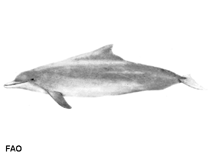
Mammalia |
Cetartiodactyla |
Delphinidae
Miljö: miljö / Klimatzon / djupintervall / distributionsområde
Ekologi
Pelagic-oceanic; amfidrom (Ref. 75906); brackvatten; djupintervall 0 - 500 m, usually 1 - 100 m. Tropical; 90°N - 90°S, 18°E - 155°E
Indo-West Pacific. [eastern Taiwan Strait population: IUCN 2017 (Ref. 115185): CR, C2a(i,ii); D.]
Längd vid första mognad / Storlek / Vikt / Ålder
Könsmognad: Lm 235.0, range 200 - 250 cm Max length : 320 cm TL hane/ej könsbestämd; (Ref. 1394); 250 cm TL (female); publicerad maxvikt: 284.0 kg (Ref. 1394)
Inhabit tropical to warm temperate coastal waters and they enter rivers, estuaries, and mangroves. Feeding is primarily on nearshore, estuaries and reef fish (Ref. 1394). Inhabits tropical to warm temperate coastal waters and they enter rivers, estuaries, and mangroves (Ref. 1394). Usually in groups of 10 or fewer individuals (Ref. 801). Feeding is primarily on nearshore, estuaries, specifically on reef fish (Ref. 1394). Feeds on bony fishes (Ref. 85079) and squids (Ref. 80529). Great white shark Carcharodon carcharias is reported to be its potential predator (Ref. 104929).
Livscykel och parningsbeteende
Könsmognad | Reproduktion | Lek | Ägg | Fekunditet | Larver
Jefferson, T.A., S. Leatherwood and M.A. Webber 1993 FAO species Identification Guide: Marine Mammals of the World. Rome, FAO. 320 p. + 587 figures. (Ref. 1394)
Status på IUCN:s rödlista
(Ref. 130435: Version 2025-2 (Global))
CITES-status (Ref. 108899)
Hot mot människor
Mänskliga användningsområden
Fiskeri: kommersiell
FAO - fiskeri: artprofil, landings search; Publication: search | FishSource | Havet omkring oss
Verktyg
Ytterligare information
MänniskorelateradFrimärken, mynt, diverse.
Internet-källor
Uppskattningar baserade på modeller
Sårbarhet i fisket
(Ref. 71543) |
High vulnerability (58 of 100). |
Priskategori
(Ref. 80766): |
Unknown. |