Mammalia |
Cetartiodactyla |
Delphinidae
Milieu: milieu / Klimaatzone / Diepte / verspreidingsgebied
Ecologie
Pelagic-oceanic; amfidroom (Ref. 75906); brak water; diepte 0 - 500 m, usually 1 - 100 m. Tropical; 90°N - 90°S, 18°E - 155°E
Indo-West Pacific. [eastern Taiwan Strait population: IUCN 2017 (Ref. 115185): CR, C2a(i,ii); D.]
Lengte bij maturiteit / Grootte / Gewicht / Leeftijd
Maturiteit: Lm 235.0, range 200 - 250 cm Max length : 320 cm TL mannelijk / geslacht onbekend; (Ref. 1394); 250 cm TL (female); max. gepubliceerd gewicht: 284.0 kg (Ref. 1394)
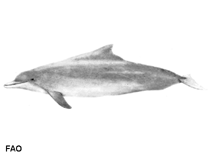
Inhabit tropical to warm temperate coastal waters and they enter rivers, estuaries, and mangroves. Feeding is primarily on nearshore, estuaries and reef fish (Ref. 1394). Inhabits tropical to warm temperate coastal waters and they enter rivers, estuaries, and mangroves (Ref. 1394). Usually in groups of 10 or fewer individuals (Ref. 801). Feeding is primarily on nearshore, estuaries, specifically on reef fish (Ref. 1394). Feeds on bony fishes (Ref. 85079) and squids (Ref. 80529). Great white shark Carcharodon carcharias is reported to be its potential predator (Ref. 104929).
Levenscyclus en paargedrag
Maturiteit | Voortplanting | Paaien | Eieren | Fecunditeit | Larven
Jefferson, T.A., S. Leatherwood and M.A. Webber 1993 FAO species Identification Guide: Marine Mammals of the World. Rome, FAO. 320 p. + 587 figures. (Ref. 1394)
Status op de Rode Lijst van het IUCN
(Ref. 130435: Version 2025-2 (Global))
CITES status (Ref. 108899)
Gevaar voor de mens
Gebruik door de mens
Visserij: commercieel
FAO - visserij: soortsprofiel, landings search; Publication: search | FishSource | Sea Around Us
Tools
Meer informatie
FysiologieZuurstofverbruik
Menselijk gerelateerdPostzegels, munten, diversen.
Internetbronnen
Schattingen op basis van modellen
Kwetsbaarheid van de visserij
(Ref. 71543) |
High vulnerability (58 of 100). |
Prijsklasse
(Ref. 80766): |
Unknown. |