Bivalvia |
Cardiida |
Psammobiidae
สิ่งแวดล้อม : สิ่งแวดล้อม / เขตภูมิอากาศ / ระดับความลึก / ระยะการกระจายสินค้า
นิเวศวิทยา
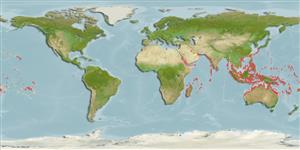
Benthic; กร่อย; ระดับความลึก 0 - 20 m (อ้างอิง 348). Tropical; 31°N - 33°S, 30°E - 137°W
Indo-Pacific: from East Africa, including Madagascar, the Red Sea, Persian Gulf and Andaman Sea, to eastern Polynesia; north to Japan and south to central Queensland and New Caledonia.
ความยาวเมื่อครบกำหนดครั้งแรก / ขนาด / น้ำหนัก / อายุ
วัยเจริญพันธุ์: Lm 2.5 range ? - ? cm Max length : 11.0 cm SHL เพศผู้/กระเทย; (อ้างอิง 348); common length : 6.5 cm SHL เพศผู้/กระเทย; (อ้างอิง 348)
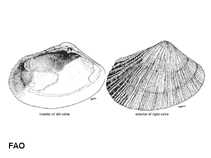
Average edible weight is at 9 g (Ref. 351). Maximum depth from Ref. 75831. Littoral and sublittoral to a depth of about 20 m (Ref. 345). Found in intertidal areas in sand (Ref 75831). Deeply buried in sand, often coarse to gravel bottoms (Refs. 345, 126564). In general, suspension feeding bivalves mainly depend on phytoplankton and detritus material for nutrition (Ref. 107088).
วงจรชีวิตและพฤติกรรมการผสมพันธุ์
วัยเจริญพันธุ์ | การสืบพันธุ์ | การวางไข่ | เซลสืบพันธ์ของเพศเมีย(ไข่) | ความดกของไข่ | ตัวอ่อน
Mass spawning occurs in late summer and larval stage is about 14 days (Ref. 351).
Poutiers, J.M. 1998 Bivalves. Acephala, Lamellibranchia, Pelecypoda. p. 123-362. In Carpenter, K. E. and V. H. Niem. 1998. FAO species identification guide for fishery purposes. The living marine resources of the Western Central Pacific. Volume 1. Seaweeds, corals, bivalves, and gastropods. Rome, FAO. (อ้างอิง 348)
สถานะบัญชีแดงของ IUCN
(อ้างอิง 130435: Version 2025-2 (Global))
สถานะไซเตส (อ้างอิง 108899)
Not Evaluated
CMS (อ้างอิง 116361)
Not Evaluated
ภัยคุกคามต่อมนุษย์
Harmless
การใช้ของมนุษย์
การประมง: การค้า
FAO - Publication: search | FishSource | ทะเลรอบๆเรา
เครื่องมือ
ข้อมูลเพิ่มเติม
พลวัตของประชากรการเจริญเติบโตอายุสูงสุด / ขนาดความยาว-น้ำหนักสัมพันธ์ความยาว-ความยาวสัมพันธ์ความยาว-ความถี่การแปลงมวลอุดมสมบรูณ์ เกี่ยวข้องกับมนุษย์แสตมป์ เหรียญ อื่นๆ
แหล่งที่มาจากอินเตอร์เน็ต
การประมาณค่าตามแบบจำลอง
ความเสี่ยงต่อการตกปลา
(อ้างอิง 71543) |
Low vulnerability (10 of 100). |
หมวดหมู่ราคา
(อ้างอิง 80766): |
Unknown. |
Nutrients
|
Calcium = 149 [71, 228] mg/100g; Iron = 8.53 [1.95, 15.11] mg/100g; Protein = 9.88 [8.64, 11.12] %; Omega3 = 0.313 [0.202, 0.423] g/100g; Selenium = 61 [50, 72] μg/100g; VitaminA = 0 μg/100g; Zinc = 2.04 [0.56, 3.51] mg/100g (wet weight); based on nutrient studies. |