Gastropoda |
Aplysiida |
Aplysiidae
Milieu: milieu / Klimaatzone / Diepte / verspreidingsgebied
Ecologie
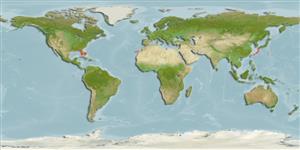
Benthic; diepte 0 - 20 m (Ref. 7727). Tropical; 44°N - 5°S, 98°W - 37°E
Atlantic Ocean and the Mediterranean.
Lengte bij maturiteit / Grootte / Gewicht / Leeftijd
Maturiteit: Lm ? range ? - ? cm Max length : 41.0 cm TL mannelijk / geslacht onbekend; (Ref. 126605); max. gepubliceerd gewicht: 1.4 kg (Ref. 126605); max. gerapporteerde leeftijd: 1.00 Jaren (Ref. 126605)
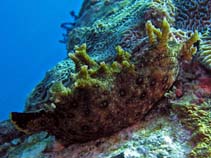
Sea hares have annual life cycles (Ref. 126605). Common on tidal platforms of mixed sand and rock; actively crawling in tide pools at night and in crevices and under rocks during the day (Ref. 866). Grazes on various types of green algae (Ref. 844). Found in warm seas (Ref. 822). Known from depths of 0 to 20 m (Ref. 7727); from low intertidal to immediate subtidal on alga-covered reefs (Ref. 337). Ejecting ink as a predator deterrence and to send alarm signals to conspecifics, but not all spotted sea hares have ink (Ref. 84419). Ink components are based on the chemical properties of their diet (Ref. 84420). Ascorhynchus sp. found parasitic on the gills of this nudibranch (Ref. 121217).
Levenscyclus en paargedrag
Maturiteit | Voortplanting | Paaien | Eieren | Fecunditeit | Larven
Members of the order Anaspidea are mostly simultaneous hermaphrodites.
Debelius, H. 2001 Nudibranchs and sea snails: Indo-Pacific field guide. Unterwasserarchiv, IKAN, frankfurt, Germany, 3rd ed. 321 pp. (Ref. 844)
Status op de Rode Lijst van het IUCN
(Ref. 130435: Version 2025-2 (Global))
CITES status (Ref. 108899)
Not Evaluated
Not Evaluated
Gevaar voor de mens
Gebruik door de mens
FAO - Publication: search | FishSource |
Tools
Meer informatie
Trofische ecologieVoedsel (prooien)
Dieetsamenstelling
Voedselconsumptie
Predatoren
LevenscyclusVoortplantingMaturiteitFecunditeitPaaienEierenOntwikkeling van de eierenLarven FysiologieZuurstofverbruik
Menselijk gerelateerdPostzegels, munten, diversen.
Internetbronnen
Schattingen op basis van modellen
Kwetsbaarheid van de visserij
(Ref. 71543) |
Low vulnerability (21 of 100). |
Prijsklasse
(Ref. 80766): |
Unknown. |