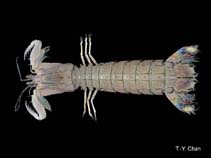
Malacostraca |
Stomatopoda |
Squillidae
পরিবেশ: পরিবেশ / জলবায়ু অঞ্চল / গভীরতার পরিসীমা / বিতরণ পরিসীমা
বাস্তুসংস্থান
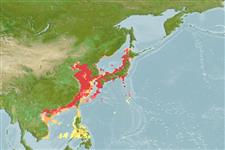
Benthic; ঈষৎ লোনা ; গভীরতার পরিসীমা 10 - 100 m (সূত্র 3099). Subtropical; 46°N - 10°N, 106°E - 144°E
Western Pacific: from Vietnam to northern Japan, south to Bohol, Philippines. Introduced to Australia and New Zealand.
প্রথম পরিপক্কতার সময় দৈর্ঘ্য / আকৃতি / ওজন / বয়স
পরিপক্কতা : Lm 9.6 range ? - ? cm Max length : 18.5 cm TL পুরুষ/ লিঙ্গ অনিধর্ারিত ; (সূত্র 3099)
Maximum depth from Ref. 80410. Demersal (Ref. 105264). Burrows in near-shore level-bottom substrates (Ref. 92) in sheltered embayment or estuaries (Ref. 3099). Occurs in muddy bottoms of bays and inlets (Ref. 105263). Feeds mainly on crustaceans, mollusks, polychaetes, and fish; occasionally on plant materials (Ref. 105093).
জীবনচক্র এবং প্রজনন আচরণ
পরিপক্কতা | প্রজনন | ডিম ছাড়া | ডিমসমূহ | ডিম্বধারন ক্ষমতা | শুককীট
Some members of the order Stomatopoda pair for life and some come together only to mate. Males produce sperm ducts rather than spermatophores; females can brood a maximum of 50,000 eggs. Life cycle: Eggs hatch to a planktonic zoea which lasts for 3 months.
Manning, R.B. 1998 Stromatopods. p. 827-849. In Carpenter, K.E. and V.H. Niem (eds.) FAO Species Identifidication Guide for Fishery Purposes. The Living Marine Resources of the Western Central Pacific. Vol. 2. Cephalopods, crustaceans, holothurians and sharks. FAO Rome. (সূত্র 92)
আইইউসিএন রেড লিস্টের অবস্থা
(সূত্র 130435: Version 2025-2 (Global))
CITES অবস্থা (সূত্র 108899)
Not Evaluated
Not Evaluated
মানুষের জন্য হুমকি
Harmless
মানুষের ব্যবহার
মৎস্য: বাণিজ্যিক
FAO - Publication: search | FishSource | আমাদের চতুর্পাশ্বের সাগর
হাতিয়ার
আরো তথ্য
শারীরবিদ্যাঅম্লজান ব্যবহার
মানব সম্পর্কিতডাকটিকিট, মুদ্রা, বিবিধ।
ইন্টারনেট সুত্র
মডেলের উপর ভিত্তি করে অনুমান
স্থিতিস্থাপক
(Ref. 69278): |
উচ্চ, সর্বনিম্ন প্রজন দ্বিগুনের সময় ১৫ মাস (K=0.72-0.82) |
মাছ ধরার ঝুঁকিপূর্ণতা
(সূত্র 71543) |
Low vulnerability (13 of 100). |
মূল্য বিভাগ
(সূত্র 80766): |
Very high. |
Nutrients
|
Calcium = 109 [35, 184] mg/100g; Iron = 1.59 [1.21, 1.97] mg/100g; Protein = 20.2 [19.2, 21.3] %; Omega3 = 0.285 [0.185, 0.386] g/100g; Selenium = 48.3 [-31.7, 128.3] μg/100g; VitaminA = 0 μg/100g; Zinc = 1.79 [1.17, 2.40] mg/100g (wet weight); based on nutrient studies. |