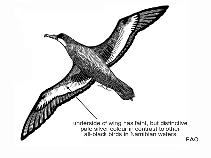
Aves |
Procellariiformes |
Procellariidae
Ambiente: milieu / zona climatica / distribuzione batimetrica / gamma di distribuzione
Ecologia
Others; distribuzione batimetrica 0 - 93 m (Fonte Biblio. 120202), usually 20 - 70 m (Fonte Biblio. 120202). Temperate; 65°N - 67°S, 180°W - 180°E (Fonte Biblio. 125423)
Circumglobal.
Lunghezza alla prima maturità / Dimensione / Peso / Età
Maturità: Lm ? range ? - ? cm Max length : 46.0 cm TL maschio/sesso non determinato; (Fonte Biblio. 8812); peso massimo pubblicato: 869.00 g (Fonte Biblio. 356)
Culmen: 4.14 cm; tarsus: 5.67 cm; wing: 30.0 cm.
Total Length: 40 to 46 cm; Wingspan: 94 to 104 cm (Ref. 8812). Wingspan: 105 cm (Ref. 91362). Nocturnal (Ref. 87784). Exhibits pursuit plunging and surface diving (Ref. 356). Gregarious at sea. Does not typically trail ships (Ref. 91362). Mean maximum diving depth on foraging trips, 39 m, and greatest depth recorded at 67 m. During the northern summer, migrates from the Antipodes into the North Pacific. In New Zealand, displaced their foraging competitors, the Antarctic Terns (Sterna vittata) from crustacean swarms by agitating the tern flock and covering the foraging surface in dense rafts. Does not breed in the North Pacific despite multitudes spending austral winter there after their long transequatorial migration from breeding areas in Australia and New Zealand (Ref. 87784). Colonial breeder (Ref. 91362) at sub-antarctic islands (Refs. 356, 91362). Winters in the sub-topical Pacific (Ref. 356). Burrow- and crevice-nesting; early in nesting cycle, wander in and out of burrows; burrows without breeding owners having as much as 10 different individuals within a single season. Population declines linked to fish-net mortality (Ref. 87784).
Ciclo vitale e comportamento di accoppiamento
Maturità | Riproduzione | Deposizione | Uova | Fecondità | Larve
Lepage, D. 2007 Avibase -the World Bird Database. http://www.bsc-eoc.org/avibase/avibase.jsp [accessed 09/07/2007]. (Fonte Biblio. 7816)
Stato della Lista Rossa IUCN
(Fonte Biblio. 130435: Version 2025-2 (Global))
Stato della CITES (Fonte Biblio. 108899)
Not Evaluated
CMS (Fonte Biblio. 116361)
Not Evaluated
Minaccia per l'uomo
Usi umani
FAO - Publication: search | FishSource |
Strumenti
Informazioni ulteriori
Dinamica della popolazioneAccrescimentoEtà massima / dimensioni massimeRapporto lunghezza-peso.Lunghezza-lunghezza rel.Lunghezza-frequenzeConversione di massaAbbondanza Ciclo di vitaRiproduzioneMaturitàFeconditàDeposizioneUovaSviluppo delle uovaLarve FisiologiaConsumo di ossigeno
Legato all'uomoFrancobolli, monete, materiale vario.
Fonti Internet
Stime basate su modelli
Vulnerabilità della pesca
(Fonte Biblio. 71543) |
Moderate vulnerability (36 of 100). |
Categoria di prezzo
(Fonte Biblio. 80766): |
Unknown. |