Aves |
Sphenisciformes |
Spheniscidae
Environnement : milieu / zone climatique / profondeur / gamme de distribution
Écologie
Others. Subtropical
Western Indian Ocean and Eastern Atlantic.
Longueur à la première maturité / Taille / Poids / Âge
Maturité: Lm ? range ? - ? cm Max length : 70.0 cm TL mâle / non sexé; (Réf. 91362); poids max. publié: 3.1 kg (Réf. 356)
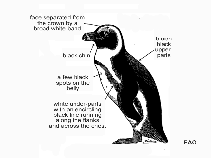
Population decline was recorded in the 19th century wherein 295,000 birds in 1956 became 170,000 birds in 1978. Threats include oil pollution, fisheries, and competition for food and space (Ref. 84934). This is a gregarious species that is commonly found in small groups and within 50 km of shoreline. It breeds in huge colonies in burrows (Ref. 91362), mainly on offshore islands (Ref. 84934). Underwater pursuit (Ref. 356).
Cycle de vie et comportement reproducteur
Maturité | Reproduction | Frai | Œufs | Fécondité | Larves
Harrison, P. 1987 Seabirds of the world: a photographic guide. Christopher Helm, Hong Kong, 317p. (Réf. 91362)
Statut dans la liste rouge de l'IUCN
(Réf. 130435: Version 2025-2 (Global))
statut CITES (Réf. 108899)
Menace pour l'homme
Utilisations par l'homme
FAO - Publication: search | FishSource |
Outils
Plus d'informations
Dynamique des populationsCroissanceÂges / tailles maximalesLongueur-poids rel.Rel. longueur-longueur.Fréquences de longueursConversion de masseAbondance Cycle de vieReproductionMaturitéFéconditéFraiŒufsDéveloppement de l'œufLarves PhysiologieConsommation d'oxygène
Liées à l'hommeTimbres, pièces de monnaie, divers
Sources Internet
Estimations basées sur des modèles
Vulnérabilité de la pêche
(Réf. 71543) |
Moderate to high vulnerability (48 of 100). |
Catégorie de prix
(Réf. 80766): |
Unknown. |