Aves |
Sphenisciformes |
Spheniscidae
Milieu: milieu / Klimaatzone / Diepte / verspreidingsgebied
Ecologie
Others. Subtropical
Western Indian Ocean and Eastern Atlantic.
Lengte bij maturiteit / Grootte / Gewicht / Leeftijd
Maturiteit: Lm ? range ? - ? cm Max length : 70.0 cm TL mannelijk / geslacht onbekend; (Ref. 91362); max. gepubliceerd gewicht: 3.1 kg (Ref. 356)
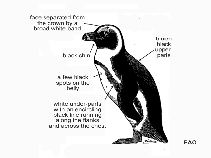
Population decline was recorded in the 19th century wherein 295,000 birds in 1956 became 170,000 birds in 1978. Threats include oil pollution, fisheries, and competition for food and space (Ref. 84934). This is a gregarious species that is commonly found in small groups and within 50 km of shoreline. It breeds in huge colonies in burrows (Ref. 91362), mainly on offshore islands (Ref. 84934). Underwater pursuit (Ref. 356).
Levenscyclus en paargedrag
Maturiteit | Voortplanting | Paaien | Eieren | Fecunditeit | Larven
Harrison, P. 1987 Seabirds of the world: a photographic guide. Christopher Helm, Hong Kong, 317p. (Ref. 91362)
Status op de Rode Lijst van het IUCN
(Ref. 130435: Version 2025-2 (Global))
CITES status (Ref. 108899)
Gevaar voor de mens
Gebruik door de mens
FAO - Publication: search | FishSource |
Tools
Meer informatie
PopulatiedynamicaGroeiMax. leeftijden / matenLengte-gewicht rel.Lengte-lengte rel.LengtefrequentiesMassaconversieAbundantie LevenscyclusVoortplantingMaturiteitFecunditeitPaaienEierenOntwikkeling van de eierenLarven FysiologieZuurstofverbruik
Menselijk gerelateerdPostzegels, munten, diversen.
Internetbronnen
Schattingen op basis van modellen
Kwetsbaarheid van de visserij
(Ref. 71543) |
Moderate to high vulnerability (48 of 100). |
Prijsklasse
(Ref. 80766): |
Unknown. |