Cephalopoda |
Octopoda |
Octopodidae | Octopodinae
環境:環境 / 気候帯 / 深さの範囲 / 分布範囲
生態学
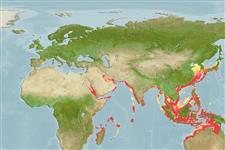
Benthic; 深さの範囲 30 - 120 m (参照 275). Tropical; 41°N - 24°S, 32°E - 143°E (参照 275)
Indo-West Pacific: from Mozambique to Red Sea and Japan.
初回成熟時の長さ / サイズ / 重さ / 年齢
成熟: Lm ? range ? - ? cm Max length : 10.0 cm ML オス/雌雄の選別がない; (参照 275); 最大公表体重: 400.00 g (参照 275)
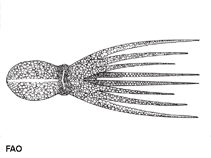
A small to moderate-sized species recognized by a distinctive color pattern consisting of large, light-colored round patches, separated by dark reticulations over the entire dorsal surface. There is also a light cream-colored longitudinal stripe along the dorsal midline of the mantle.
Maximum total length is 30 cm. Supports subsistence fisheries in East Africa (Ref. 3722). Found in sand and muddy sand areas. Inhabits holes and defends its turf. Solitary with crepuscular behavior (Ref. 101169). Benthic. Inhabits the continental shelf (Ref. 9773).
ライフサイクルと交尾行動
成熟 | 繁殖 | 放精 | 卵 | 生産力 | 幼生
Members of the class Cephalopoda are gonochoric. Male and female adults usually die shortly after spawning and brooding, respectively. Mating behavior: Males perform various displays to attract potential females for copulation. During copulation, male grasp the female and inserts the hectocotylus into the female's mantle cavity where fertilization usually occurs. Life cycle: Embryos hatch into planktonic stage and live for some time before they grow larger and take up a benthic existence as adults.
主な参考文献
参考文献 | コーディネーター | 協力者
Roper, C.F.E., M.J. Sweeney and C.E. Nauen 1984 FAO Species Catalogue. Vol. 3. Cephalopods of the world. An annotated and illustrated catalogue of species of interest to fisheries. FAO Fish. Synop. 125(3):277p. Rome: FAO. (参照 275)
IUCNのレッドリストの状況は
(参照 130435: Version 2025-2 (Global))
ワシントン条約ステータス (参照 108899)
Not Evaluated
Not Evaluated
人間に対する脅威
人間の用途
水産業: 商業
FAO - Publication: search | FishSource |
用具
インターネットの情報源
モデルに基づく推定値
回復力
(Ref. 69278): |
手段, 1.4年~4.4年の倍増期間の最小個体群 (K=0.39) |
漁業の脆弱性
(参照 71543) |
Low vulnerability (25 of 100). |
価格帯
(参照 80766): |
Low. |