Cephalopoda |
Octopoda |
Alloposidae
ပတ်ဝန်းကျင် : ပတ်ဝန်းကျင် / ရာသီဥတုဇုန် / အနက္အတိုင္းအတာ / ဖြန့်ဖြူးမှုအပိုင်း
ေဂဟေဗဒကိုေလ့လာေသာ ဘာသာရပ္
ေရမ်က္ႏွာျပင္ အေပၚယံႏွင့္ေအာက္ေျခတြင္ ေနထိုင္အသက္ရွင္ႏိုင္ေသာငါးမ်ဳိးမ်ား; အနက္အတိုင္းအတာ 0 - 6787 m (က်မ္းကိုးစာရင္း 96968). Subtropical
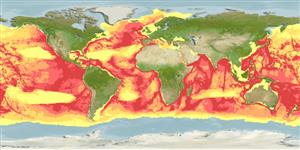
Circumglobal in tropical and subtropical waters.
ပထမအရွယ်တွင် အရှည် / အရြယ္အစား / အေလးခ်ိန္ / အသက္အရြယ္
မိ်ဳးပြားရန္အရြယ္ေရာက္ျပီ: Lm ? range ? - ? cm Max length : 10.0 cm ML အထီး/လိြင္ခြဲျခားျခင္းမျပဳနုိင္ေသာ; (က်မ္းကိုးစာရင္း 96968); 69 cm ML (female)
Occurs in mesopelagic and bathypelagic in open waters but often associated with continental slopes (Ref. 114825). Depth range in open-ocean from surface to at least 1,260 m, over depths of up to 6,787 m. Collected in bottom trawls on continental shelves and slopes at depths of 100 to 3,173 m. Possibly not entirely pelagic, but might pass relatively short periods of its life cycle in open waters, soon returning to a life at the bottom especially on continental slopes. Females brood their eggs attached to the oral side of the arm bases near the mouth. Likely an intermittent spawner. The deep umbrella formed by the arms and webs of the female possibly serves as the main organ of locomotion/swimming. When mature, and before autotomized, the hectocotylus of males protrudes from the pouch opening on the inner surface of web between the second and fourth pairs of arms. Feeds on crustaceans and cephalopods (Ref. 96968).
ဘဝသံသရာနှင့် မိတ်လိုက်သည့် အပြုအမူ
မိ်ဳးပြားရန္အရြယ္ေရာက္ျပီ | မ်ိဳးပြားသားေပါက္ျခင္း | သားေပါက္ျခင္း | ဥမ်ား | ဥခ်နွဳန္း | သားေလာင္း
Members of the class Cephalopoda are gonochoric. Male and female adults usually die shortly after spawning and brooding, respectively. Mating behavior: Males perform various displays to attract potential females for copulation. During copulation, male grasp the female and inserts the hectocotylus into the female's mantle cavity where fertilization usually occurs. Life cycle: Embryos hatch into planktonic stage and live for some time before they grow larger and take up a benthic existence as adults.
O'Shea, S. 2004 The giant octopus Haliphron atlanticus in New Zealand waters. New Zealand Journal of Zoology 31:7-13. (က်မ္းကိုးစာရင္း 77104)
စိုးရိမ္ဖြယ္အေျခအေနသို႔ေရာက္ရွိေန ေသာမ်ိဳးသုဥ္းရွားပါးေတာ့မည့္မ်ိဳးစိတ္မ်ား၏အဆင့္အတန္း
(က်မ္းကိုးစာရင္း 130435: Version 2025-2 (Global))
မ်ဳိးသုန္းေပ်ာက္ကြယ္ရန္ နီးကပ္ေနေသာမ်ဳိးစိတ္မ်ားကို ေရာင္းဝယ္ျခင္းမွ ကာကြယ္ရန္ ႏုိင္ငံတကာဆိုင္ရာအစည္းအေဝး၏ အေျခအေန (က်မ္းကိုးစာရင္း 108899)
Not Evaluated
CMS (က်မ္းကိုးစာရင္း 116361)
Not Evaluated
လူသားမ်ားကို ထိတ္လန္႔ေျခာက္ျခားေစသည္။
လူသားမ်ား၏အသံုးခ်မႈ
FAO - Publication: search | FishSource |
အသံုးျပဳေသာကိရိယာ
ပိုမိုေသာသတင္းအခ်က္အလက္မ်ားကိုရယူနုိင္ရန္္
အစာရရွိမႈကြင္းဆက္နွင့္ အစာစားေသာအေလ့အက်င့္နွင့္ ပတ္၀န္းက်င္ဆက္စပ္မႈ ေဂဟေဗဒကိုေလ့လာေသာ ဘာသာရပ္ ဇီဝကမ္မဗေဒေလအသံုးျပဳမႈ ၊ ေလသံုးစြဲမႈပမာဏ
လူသားနဲ့ဆိုင်တယ်။တံဆိပ်ခေါင်းများ၊ အကြွေစေ့များ၊
အင္တာနက္အရင္းအျမစ္
မော်ဒယ်များကို အခြေခံ၍ ခန့်မှန်းချက်
ငါးဖမ်းခြင်း အားနည်းချက်
(က်မ္းကိုးစာရင္း 71543) |
Moderate to high vulnerability (48 of 100). |
ေစ်းနႈန္းအမ်ိဳးအစားကို အဆင့္ဆင့္ခြဲျခားျခင္း
(က်မ္းကိုးစာရင္း 80766): |
Unknown. |