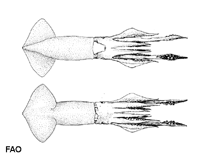
Cephalopoda |
Oegopsida |
Ommastrephidae | Todarodinae
Milieu: milieu / Klimaatzone / Diepte / verspreidingsgebied
Ecologie
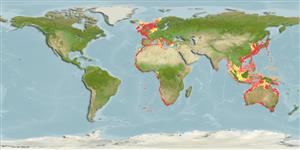
Benthopelagisch; diepte 20 - 850 m (Ref. 275). Tropical; 9°C - 18°C (Ref. 417); 73°N - 44°S, 18°W - 155°E
Atlantic Ocean, the Mediterranean and Indo-West Pacific. Tropical to temperate.
Lengte bij maturiteit / Grootte / Gewicht / Leeftijd
Maturiteit: Lm 18.8, range 20 - ? cm Max length : 22.0 cm ML mannelijk / geslacht onbekend; (Ref. 104052); 29 cm ML (female); common length : 13.0 cm ML mannelijk / geslacht onbekend; (Ref. 275); common length :20 cm ML (female)
Maximum depth from Ref. 122892. Neritic (Ref. 90638). Pelagic (Ref. 122890), demersal (Ref. 122892). Mainly lives in the lower sublittoral and upper bathyal over the continental shelf, associated with sandy and muddy bottoms. More abundant in highly productive areas around the shelf break. Frequents the upper slope of regions with steep slopes (Ref. 122892). Also found in the slope. Voracious opportunistic predator (Ref. 90638). Feeds on teleosts, crustaceans, squids and gastropods (Ref. 107051).
Levenscyclus en paargedrag
Maturiteit | Voortplanting | Paaien | Eieren | Fecunditeit | Larven
Two main spawning seasons, during spring and autumn-winter.
Schneider, W. 1990 FAO species identification sheets for fishery purposes. Field guide to the commercial marine resources of the Gulf of Guinea. Prepared and published with the support of the FAO Regional Office for Africa. Rome: FAO. 268 p. (Ref. 417)
Status op de Rode Lijst van het IUCN
(Ref. 130435: Version 2025-2 (Global))
CITES status (Ref. 108899)
Not Evaluated
Not Evaluated
Gevaar voor de mens
Gebruik door de mens
Visserij: commercieel
FAO - Publication: search | FishSource |
Tools
Meer informatie
FysiologieZuurstofverbruik
Menselijk gerelateerdPostzegels, munten, diversen.
Internetbronnen
Schattingen op basis van modellen
Kwetsbaarheid van de visserij
(Ref. 71543) |
Low vulnerability (19 of 100). |
Prijsklasse
(Ref. 80766): |
Medium. |