Cephalopoda |
Myopsida |
Loliginidae
环境:氛围 / 气候带 / 深度上下限 / 分布范围
生态学
居于水底的; 深度上下限 68 - 431 m (参考文献 114857). Subtropical, preferred 24°C (参考文献 107945); 61°N - 28°S, 21°W - 47°E (参考文献 275)
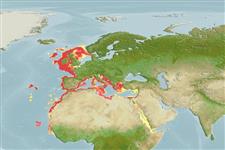
Eastern Atlantic, the Mediterranean and Western Indian Ocean: 20°N to 60°N, west African coast south to the Canary Islands and the Red Sea except Baltic Sea. Subtropical to polar waters.
首次成熟时的长度 / 大小 / 重量 / 年龄
成熟度: Lm ?, range 16 - ? cm Max length : 93.7 cm ML 雄鱼/尚未辨别雌雄; (参考文献 275); 41 cm ML (female)
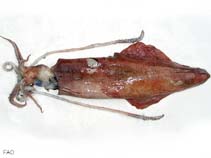
Maximum size for males is 93.7 cm, mantle length (Ref. 104052). Caught with very small boats, using jigs in daytime at depths of 80 to 100 m (Ref. 2760). Occurs in tropical and subtropical climates (Ref. 275). Found In inshore waters over rocky ground at the start of the season and on sandy or muddy bottom later in the season (Ref. 106900). Feeds on small, juvenile fishes, other cephalopods, crustaceans, polychaetes (Ref. 275).
生命周期和交配行为
成熟度 | 繁殖 | 产卵场 | 卵 | 孕卵数 | 仔鱼
Members of the class Cephalopoda are gonochoric. Male and female adults usually die shortly after spawning and brooding, respectively. Mating behavior: Males perform various displays to attract potential females for copulation. During copulation, male grasp the female and inserts the hectocotylus into the female's mantle cavity where fertilization usually occurs. Life cycle: Embryos hatch into planktonic stage and live for some time before they grow larger and take up a benthic existence as adults.
主要参考文献
参考文献 | 合作者 | 合作者
Roper, C.F.E., M.J. Sweeney and C.E. Nauen 1984 FAO Species Catalogue. Vol. 3. Cephalopods of the world. An annotated and illustrated catalogue of species of interest to fisheries. FAO Fish. Synop. 125(3):277p. Rome: FAO. (参考文献 275)
世界自然保护联盟红皮书
(参考文献 130435: Version 2025-2 (Global))
Not Evaluated
Not Evaluated
对人类的威胁
人类利用
渔业: 商业性
FAO - 渔业: landings search; Publication: search | FishSource | 周边海洋
工具
网络资源
基于模型的估算
渔业脆弱性
(参考文献 71543) |
Low to moderate vulnerability (34 of 100). |
气候脆弱性
(参考文献 125649) |
Moderate vulnerability (38 of 100) |
价格分类
(参考文献 80766): |
Very high. |
Nutrients
|
Calcium = 126 [75, 177] mg/100g; Iron = 4.79 [1.67, 7.92] mg/100g; Protein = 15.5 [13.7, 17.4] %; Omega3 = 0.414 [0.262, 0.566] g/100g; Selenium = 57.8 [48.5, 67.2] μg/100g; VitaminA = 0 μg/100g; Zinc = 1.97 [0.92, 3.02] mg/100g (wet weight); based on nutrient studies. |