Holothuroidea |
Synallactida |
Stichopodidae
Entorno: milieu / zona climática / rango de profundidad / gama de distribución
Ecología
Benthic; rango de profundidad 5 - 800 m (Referencia 93433), usually 100 - 299 m (Referencia 93433). Subtropical; 56°N - 17°S, 83°W - 36°E
Distribución
Territories | Áreas FAO | Ecosistemas | Ocurrencias, apariciones | Introducciones
Atlantic and the Mediterranean: Antilles to Gulf of Mexico, north to Ireland to Angola and east to Turkey.
Longitud en la primera madurez / Tamaño / Peso / Edad
Madurez: Lm ? range ? - ? cm Max length : 35.0 cm TL macho / no sexado; (Referencia 366)
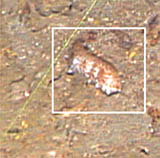
Maximum size: 35 cm (Ref. 366); 30 cm (Ref. 358). Maximum width: 7 cm (Ref. 366). Body: depressed enough with a side fold 5 cm pink power station (Ref. 366); definitely flattened form; is provided with the ventral face with 3 lines with podia. Dorsal tegument: Roughcast wart outgrowths and appendices; the papillae, of big size and white color; being limited to the periphery. Variable coloring, of brown with nuance of yellow to red, the sides being constellated with maculae possible blanches.
Maximum size: 35 cm (Ref. 366); 30 cm (Ref. 358). Methods: Captured by dredgers and trawls, this species is used in some countries of the zone (France, Spain where it is very appreciated in Catalonia). One needs additional information on the mode of Net use carrying of large papillae and separating the faces dorsal and ventral (Ref. 366). Abundant in the continental shelf (Refs. 93433, 122969); also found in the continental slope (Ref. 93433). Lives on rubble (Ref. 111335). Recorded from the upper sublittoral zone of Sidi Medjdoub, Mostaganem, Algeria. Abundant in depths of 150 to 200m with a constant water temperature of 13°C (Ref. 128655).
Ciclo vital y comportamiento de apareamiento
Madurez | Reproducción | Puesta | Huevos | Fecundidad | Larva
Members of the class Holothuroidea are gonochoric and have only one gonad. Spawning and fertilization are both external and some exhibit brooding. Life cycle: Embryos develop into planktotrophic larvae (auricularia) then into doliolaria (barrel-shaped stage) which later metamorphose into juvenile sea cucumbers.
Ramón, M., J. Lleonart and E. Massutí 2010 Royal cucumber (Stichopus regalis) in the northwestern Mediterranean: distribution pattern and fishery. Fish. Res. 105(1):21-27. (Referencia 93433)
Situación en la Lista Roja de la UICN
(Referencia 130435: Version 2025-2 (Global))
Estatus CITES (Referencia 108899)
Not Evaluated
CMS (Referencia 116361)
Not Evaluated
Amenaza para el ser humano
Usos humanos
Pesquerías: comercial
FAO - Publication: search | FishSource |
Herramientas
Más información
Dinámica de la poblaciónCrecimientoEdades / tallas máximasLongitud-peso rel.Longitud-longitud rel.Longitud-frecuenciasConversión de masasAbundancia Ciclo de vidaReproducciónMadurezFecundidadPuestaHuevosDesarrollo de los huevosLarva FisiologíaConsumo del oxígeno
Relacionados con el ser humanoSellos, monedas, varios
Fuentes de Internet
Estimaciones basadas en modelos
Vulnerabilidad pesquera
(Referencia 71543) |
Low vulnerability (25 of 100). |
Categoría de precios
(Referencia 80766): |
Unknown. |