Holothuroidea |
Synallactida |
Stichopodidae
Environnement : milieu / zone climatique / profondeur / gamme de distribution
Écologie
Benthic; profondeur 5 - 800 m (Réf. 93433), usually 100 - 299 m (Réf. 93433). Subtropical; 56°N - 17°S, 83°W - 36°E
Atlantic and the Mediterranean: Antilles to Gulf of Mexico, north to Ireland to Angola and east to Turkey.
Longueur à la première maturité / Taille / Poids / Âge
Maturité: Lm ? range ? - ? cm Max length : 35.0 cm TL mâle / non sexé; (Réf. 366)
Description synthétique
Morphologie
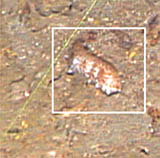
Maximum size: 35 cm (Ref. 366); 30 cm (Ref. 358). Maximum width: 7 cm (Ref. 366). Body: depressed enough with a side fold 5 cm pink power station (Ref. 366); definitely flattened form; is provided with the ventral face with 3 lines with podia. Dorsal tegument: Roughcast wart outgrowths and appendices; the papillae, of big size and white color; being limited to the periphery. Variable coloring, of brown with nuance of yellow to red, the sides being constellated with maculae possible blanches.
Maximum size: 35 cm (Ref. 366); 30 cm (Ref. 358). Methods: Captured by dredgers and trawls, this species is used in some countries of the zone (France, Spain where it is very appreciated in Catalonia). One needs additional information on the mode of Net use carrying of large papillae and separating the faces dorsal and ventral (Ref. 366). Abundant in the continental shelf (Refs. 93433, 122969); also found in the continental slope (Ref. 93433). Lives on rubble (Ref. 111335). Recorded from the upper sublittoral zone of Sidi Medjdoub, Mostaganem, Algeria. Abundant in depths of 150 to 200m with a constant water temperature of 13°C (Ref. 128655).
Cycle de vie et comportement reproducteur
Maturité | Reproduction | Frai | Œufs | Fécondité | Larves
Members of the class Holothuroidea are gonochoric and have only one gonad. Spawning and fertilization are both external and some exhibit brooding. Life cycle: Embryos develop into planktotrophic larvae (auricularia) then into doliolaria (barrel-shaped stage) which later metamorphose into juvenile sea cucumbers.
Ramón, M., J. Lleonart and E. Massutí 2010 Royal cucumber (Stichopus regalis) in the northwestern Mediterranean: distribution pattern and fishery. Fish. Res. 105(1):21-27. (Réf. 93433)
Statut dans la liste rouge de l'IUCN
(Réf. 130435: Version 2025-2 (Global))
statut CITES (Réf. 108899)
Not Evaluated
Not Evaluated
Menace pour l'homme
Utilisations par l'homme
Pêcheries: commercial
FAO - Publication: search | FishSource |
Outils
Plus d'informations
Dynamique des populationsCroissanceÂges / tailles maximalesLongueur-poids rel.Rel. longueur-longueur.Fréquences de longueursConversion de masseAbondance Cycle de vieReproductionMaturitéFéconditéFraiŒufsDéveloppement de l'œufLarves PhysiologieConsommation d'oxygène
Liées à l'hommeTimbres, pièces de monnaie, divers
Sources Internet
Estimations basées sur des modèles
Vulnérabilité de la pêche
(Réf. 71543) |
Low vulnerability (25 of 100). |
Catégorie de prix
(Réf. 80766): |
Unknown. |