Bivalvia |
Ostreida |
Ostreidae
Meio ambiente: milieu / Zona climática / intervalo de profundidade / faixa de distribuição
Ecologia
Benthic; intervalo de profundidade 0 - 5 m (Ref. 348). Tropical; 45°N - 42°S, 8°E - 133°W
Indo-Pacific and Eastern Atlantic. Introduced in the Mediterranean.
Comprimento de primeira maturação / Tamanho / Peso / Idade
Maturidade: Lm ? range ? - ? cm Max length : 20.0 cm SHL macho/indeterminado; (Ref. 348); common length : 10.0 cm SHL macho/indeterminado; (Ref. 348)
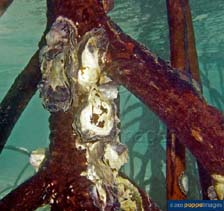
Artisanal to industrial exploitation, from natural beds and by aquaculture (Ref. 348). Attached to rocks in the intertidal where it may form a distinct zone in the upper eulittoral (Ref. 801). Found in shallow subtidal levels and occurs in dense colonies (Ref. 101156). Also on the breathing roots and trunks of mangrove trees and on pier piles (Ref. 102838). Coexists with an assemblage of grazing gastropods (Ref. 101156).
Ciclo de vida ou comportamento de acasalamento
Maturidade | Reprodução | Desova | Ovos | Fecundidade | Larvas
Members of the class Bivalvia are mostly gonochoric, some are protandric hermaphrodites. Life cycle: Embryos develop into free-swimming trocophore larvae, succeeded by the bivalve veliger, resembling a miniature clam.
Poutiers, J.M. 1998 Bivalves. Acephala, Lamellibranchia, Pelecypoda. p. 123-362. In Carpenter, K. E. and V. H. Niem. 1998. FAO species identification guide for fishery purposes. The living marine resources of the Western Central Pacific. Volume 1. Seaweeds, corals, bivalves, and gastropods. Rome, FAO. (Ref. 348)
Status na Lista Vermelha da UICN
(Ref. 130435: Version 2025-2 (Global))
Status no CITES (Ref. 108899)
Not Evaluated
Not Evaluated
Ameaça para os humanos
Uso pelos humanos
Pescarias: espécies comerciais
FAO - Aquaculture Systems: production search; Publication: search | FishSource | Sea Around Us
Ferramentas
Mais informação
Dinâmica populacionalCrescimentoIdade máxima / tamanhosRelação comprimento-peso.Relação comprimento-comprimento.Frequências de comprimentoConversão de massaAbundância Ciclo de vidaReproduçãoMaturidadeFecundidadeDesovaOvosDesenvolvimento dos ovosLarvas FisiologiaConsumo de oxigênio
Relacionado a humanosSelos, moedas, diversos.
Fontes da internet
Estimativas baseadas em modelos
Vulnerabilidade da pesca
(Ref. 71543) |
Low vulnerability (10 of 100). |
Categoria de preço
(Ref. 80766): |
Unknown. |
Nutrients
|
Calcium = 149 [71, 228] mg/100g; Iron = 8.53 [1.95, 15.11] mg/100g; Protein = 9.88 [8.64, 11.12] %; Omega3 = 0.313 [0.202, 0.423] g/100g; Selenium = 61 [50, 72] μg/100g; VitaminA = 0 μg/100g; Zinc = 2.04 [0.56, 3.51] mg/100g (wet weight); based on nutrient studies. |