Rangia cuneata, Atlantic rangia : fisheries
Advertisement

You can sponsor this page

Rangia cuneata   (Sowerby I, 1831)

Atlantic rangia

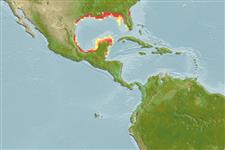
Native range | All suitable habitat | Point map | Year 2050
This map was computer-generated and has not yet been reviewed.
Rangia cuneata  AquaMaps  Data sources: GBIF OBIS
アップロード 写真 
全ての写真 | グーグルの画像 |
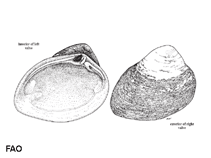
Image of Rangia cuneata (Atlantic rangia)
Rangia cuneata
Picture by FAO

分類 / 名前 共通名の | 類義語 | CoL | ITIS | WoRMS

Bivalvia | Venerida | Mactridae

環境:環境 / 気候帯 / 深さの範囲 / 分布範囲 生態学

Benthic; 汽水性の; 深さの範囲 0 - 124 m (参照 104339), usually 0 - 2 m (参照 104339).  Tropical; ? - 15°C (参照 104336); 31°N - 17°N, 98°W - 81°W

分布 Territories | 国連食糧農業機関の区域 | エコシステム | 事件 | 導入

Western Atlantic: The Gulf of Mexico from Campeche to Florida, north to Chesapeake Bay, Maryland. Introduced in Hudson River, Belgium and Poland.

初回成熟時の長さ / サイズ / 重さ / 年齢

成熟: Lm ?, range 1 - ? cm Max length : 9.4 cm SHL オス/雌雄の選別がない; (参照 104339); 最大記録サイズ: 15 年 (参照 104339)

簡単な記述 形態学

Shell oval, heavy, very thick. Hinge with lateral teeth transversally striated. Pallial sinus reduced. Umbones anterior, pointing inward and in anterior direction. Periostracum strong and smooth. Colour: externally dirt white, internally glossy white with slight blue-grey tinge; periostracum grey-brown (Ref. 271).

生物学     用語集 (例 表在性)

Maximum depth range from Ref. 104365. Lives in low salinity waters, found predominantly in estuaries (Ref. 121904). Also in salt marsh (Ref. 104365). Subtidal (Ref. 104487). It is found infaunal in sandy mud, in very low salinity brackish water (Ref. 271). Habitats have high water turbidity. Found in soft substrates which are a mixture of sand, mud and vegetation (Refs. 104240, 104487). A non-selective filter-feeder which turns substantial quantities of plant detritus and phytoplankton into clam biomass. Also obtains nutrition from sediments via direct ingestion or by feeding on bacteria. Predators include fish, crabs, gastropods and ducks (Ref. 104240).

ライフサイクルと交尾行動 成熟 | 繁殖 | 放精 | | 生産力 | 幼生

Life cycle: Embryos develop into free-swimming trocophore larvae, succeeded by the bivalve veliger, resembling a miniature clam (Ref. 833). Spawning is continuous throughout the year (Ref. 104339).

主な参考文献 参考文献 | コーディネーター | 協力者

Carpenter, K.E. (ed.) 2002 The living marine resources of the Western Central Atlantic. Volume 1: Introduction, molluscs, crustaceans, hagfishes, sharks, batoid fishes, and chimaeras. FAO Species Identification Guide for Fishery Purposes and American Society of Ichthyologists and Herpetologists Special Publication No. 5, Rome. 600p. (参照 271)

IUCNのレッドリストの状況は (参照 130435: Version 2025-2 (Global))


ワシントン条約ステータス (参照 108899)

Not Evaluated

CMS (参照 116361)

Not Evaluated

人間に対する脅威

人間の用途

水産業: 商業
FAO - Publication: search | FishSource | 私達の周りの海

用具

より多くの情報

養殖生態
生態学
人口動態
成長
最大年齢/サイズ
長さ-重量比。
長短関係。
体長組成
質量変換
豊度
ライフサイクル
繁殖
成熟
生産力
放精

卵の開発
幼生
生理学
酸素消費
人間関係
切手、コイン、その他
アウトリーチ
参考文献

インターネットの情報源

BHL | BOLD Systems | CISTI | DiscoverLife | FAO - Publication: search | Fishipedia | GenBank (ゲノム, ヌクレオチド) | GloBI | 1 GoMexSI (interaction data) | Google Books | Google Scholar | Google | PubMed | 生命の木 | Wikipedia (行く, 検索する) | 動物に関する記録

モデルに基づく推定値

回復力
(Ref. 69278):
非常に低い, 14年以上の倍増期間の最小個体群 (K=0.01-0.03; tmax=15)
漁業の脆弱性
(参照 71543)
Moderate to high vulnerability (52 of 100).
価格帯
(参照 80766):
Low.