Bivalvia |
Venerida |
Mactridae
محیط زیست: محیط زیست / منطقه آب و هوایی / تغييرات عمق / محدوده توزیع
بوم شناسي
Benthic; لب شور; تغييرات عمق 0 - 124 m (مرجع 104339), usually 0 - 2 m (مرجع 104339). Tropical; ? - 15°C (مرجع 104336); 31°N - 17°N, 98°W - 81°W
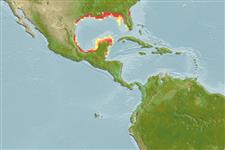
Western Atlantic: The Gulf of Mexico from Campeche to Florida, north to Chesapeake Bay, Maryland. Introduced in Hudson River, Belgium and Poland.
طول در اولین بلوغ / اندازه / وزن / سن
بلوغ: Lm ?, range 1 - ? cm Max length : 9.4 cm SHL جنس نر / بدون خواص جنسي; (مرجع 104339); بيشينه سن گزارش شده: 15 سال ها (مرجع 104339)
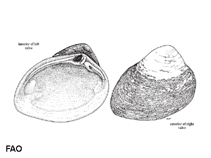
Shell oval, heavy, very thick. Hinge with lateral teeth transversally striated. Pallial sinus reduced. Umbones anterior, pointing inward and in anterior direction. Periostracum strong and smooth. Colour: externally dirt white, internally glossy white with slight blue-grey tinge; periostracum grey-brown (Ref. 271).
Maximum depth range from Ref. 104365. Lives in low salinity waters, found predominantly in estuaries (Ref. 121904). Also in salt marsh (Ref. 104365). Subtidal (Ref. 104487). It is found infaunal in sandy mud, in very low salinity brackish water (Ref. 271). Habitats have high water turbidity. Found in soft substrates which are a mixture of sand, mud and vegetation (Refs. 104240, 104487). A non-selective filter-feeder which turns substantial quantities of plant detritus and phytoplankton into clam biomass. Also obtains nutrition from sediments via direct ingestion or by feeding on bacteria. Predators include fish, crabs, gastropods and ducks (Ref. 104240).
Life cycle: Embryos develop into free-swimming trocophore larvae, succeeded by the bivalve veliger, resembling a miniature clam (Ref. 833). Spawning is continuous throughout the year (Ref. 104339).
مآخذ اصلی
مراجع | هماهنگ كننده | همكاران
Carpenter, K.E. (ed.) 2002 The living marine resources of the Western Central Atlantic. Volume 1: Introduction, molluscs, crustaceans, hagfishes, sharks, batoid fishes, and chimaeras. FAO Species Identification Guide for Fishery Purposes and American Society of Ichthyologists and Herpetologists Special Publication No. 5, Rome. 600p. (مرجع 271)
وضعيت در فهرست قرمز IUCN
(مرجع 130435: Version 2025-2 (Global))
وضعيت از نظر سايتس (مرجع 108899)
Not Evaluated
Not Evaluated
خطر برای انسان ها
استفاده انسانی
ماهي گيري – شيلات: تجاري
FAO - Publication: search | FishSource | دریای اطراف ما
ابزارها
اطلاعات بيشتر
مرتبط با انسانتمبر، سکه، متفرقه.
منابع اينترنتي
تخمینها بر اساس مدلها
جهندگی
(Ref. 69278): |
خیلی آهسته, كمينه زمان لازم براي دو برابر شدن جمعيت بيش از 14 سال (K=0.01-0.03; tmax=15) |
آسیبپذیری ماهیگیری
(مرجع 71543) |
Moderate to high vulnerability (52 of 100). |
طبقه قيمت
(مرجع 80766): |
Low. |