Malacostraca |
Decapoda |
Homolidae
ສະພາບແວດລ້ອມ: ສະພາບແວດລ້ອມ / ເຂດດິນຟ້າອາກາດ / ລະດັບຄວາມເລິກ / ຂອບເຂດການແຈກຢາຍ
ນິເວດວິທະຍາ
Benthic; ລະດັບຄວາມເລິກ 10 - 1212 m (ເອກະສານອ້າງອີງ 435), usually 80 - 350 m (ເອກະສານອ້າງອີງ 435). Temperate; 64°N - 36°S, 34°W - 29°E
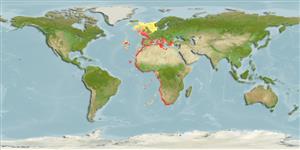
Eastern Atlantic and the Mediterranean: from Morocco to Angola and off lying islands, northwards to Hebrides and Southwest Norway, also in Mediterranean as far as Greece.
ຄວາມຍາວໃນການເຕີບໂຕເຕັມຄັ້ງທໍາອິດ / ຂະໜາດ / ນ້ຳໜັກ / ອາຍຸ
ການຈະເລີນເຕັມໄວ: Lm 7.2 range ? - ? cm Max length : 21.5 cm CL ຕົວຜູ້/ບໍ່ມີເພດ; (ເອກະສານອ້າງອີງ 435)
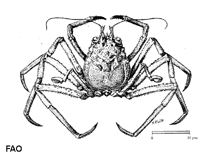
Maximum depth from Ref. 106053. In bathyal oceanic communities (Ref. 96584). Occurs at depths from 10 to 1000 m, common at depths of 80 to 350 m (Ref. 435). Deep-water species, recorded down to 1212 m. Found in the shelf (Ref. 105470), upper and middle slope (Ref. 96584). where it is abundant in the latter (Ref. 96584). Prefers intermixed bathyal mud and emerging rocky substrates. Reported to be among cold-water coral community, specifically on coral mounds and coral habitats on muddy bottoms (Ref. 96584). Also found on seamounts (Ref. 122979). Carries a sponge on its back with its fifth pereiopods. Predator of benthic decapods (Ref. 96584) and an active scavenger (Refs. 96584, 106053).
Members of the order Decapoda are mostly gonochoric. Mating behavior: Precopulatory courtship ritual is common (through olfactory and tactile cues); usually indirect sperm transfer.
Fischer, W., G. Bianchi and W.B. Scott (eds.) 1981 True Crabs. 6: pag.var. In FAO species identification sheets for fishery purposes. Eastern Central Atlantic (fishing areas 34, 47; in part). Canada Funds-in-Trust. Ottawa, Department of Fisheries and Oceans Canada, by arrangement with the Food and AgriculturesOrganization of the United Nations, 1-7: pag.var. (ເອກະສານອ້າງອີງ 435)
ສະຖານະພາບບັນຊີແດງຂອງ IUCN
(ເອກະສານອ້າງອີງ 130435: Version 2025-2 (Global))
ສະຖານະ CITES (ເອກະສານອ້າງອີງ 108899)
Not Evaluated
CMS (ເອກະສານອ້າງອີງ 116361)
Not Evaluated
ໄພຂົ່ມຂູ່ຕໍ່ມະນຸດ
ການນໍາໃຊ້ຂອງມະນຸດ
ການປະມົງ: ເປັນສີນຄ້າ
FAO - Publication: search | FishSource |
ເຄື່ອງມື
ຂໍ້ມູນຕື່ມອີກ
ຟີຊິກສາດການບໍລິໂພກອົກຊີເຈນ
ມະນຸດທີ່ກ່ຽວຂ້ອງສະແຕມ, ຫຼຽນ, ອື່ນໆ.
ແຫຼ່ງອີນເຕີເນັດ
ການຄາດຄະເນໂດຍອີງໃສ່ແບບຈໍາລອງ
ຄວາມຢືດຢຸ່ນ
(Ref. 69278): |
ສູງ, ປະຊາກອນຕຳ່ສຸດທີ່ໃຊ້ເວລາສອງໜ້ອຍກວ່າ 15 ເດືອນ (Fec=217,000) |
ຄວາມສ່ຽງຕໍ່ການຫາປາ
(ເອກະສານອ້າງອີງ 71543) |
Low vulnerability (12 of 100). |
ປະເພດລາຄາ
(ເອກະສານອ້າງອີງ 80766): |
Unknown. |