Malacostraca |
Decapoda |
Geryonidae
Ambiente: milieu / zona climática / intervalo de profundidade / gama de distribuição
Ecologia
Benthic; intervalo de profundidade 200 - 2002 m (Ref. 101759). Deep-water; 7°C - 16°C; 38°N - 23°N, 88°W - 64°W
Western Atlantic: South Atlantic Bight, the Gulf of Mexico and Bermuda.
Comprimento na primeira maturidade / Tamanho / Peso / Idade
Maturidade: Lm ?, range 9 - 16.9 cm Max length : 19.0 cm CW macho/indeterminado; (Ref. 101836); peso máx. Publicado: 2.0 kg (Ref. 101836)
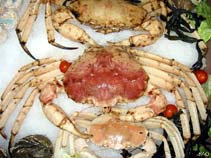
Carapace broader than long. Median pair of frontal teeth separated by a wide sinus, teeth scarcely overreaching obtuse lateral frontal teeth. Orbits usually more than 3/4 frontal width. Anterolateral teeth 5, second and fourth reduced, distance between first and third usually smaller than distance between third and fifth. Cheliped with blunt lobe on upper margin of merus, carpus lacking outer spine, propodus lacking distal dorsal spine. Meri of pereiopods lacking distal dorsal spine. Fifth leg: merus broad, less than 2/3 carapace width; propodus broad, length less than 4.5 times width; propodus and dactylus subequal in length, or dactylus slightly longer. Dactili of pereiopods compressed, narrow, height at midlength much greater than width. Color: tan to cream.
Maximum depth from Ref. 97531 Inhabits the continental slope on flat foraminiferan ooze habitat, coral mounds, ripple habitat, dunes, black pebble habitat, rock outcrops, and soft-bioturbated habitat (Ref. 367). Also in muddy and muddy-sandy bottoms (Ref. 101384). Opportunistic feeder (Ref. 104380).
Ciclo de vida e comportamento de acasalamento
Maturidade | Reprodução | Desova | Ovos | Fecundidade | Larvas
Life cycle: Eggs are incubated for approximately six months after which the larvae hatch. Mating behavior: Mating occurs immediately after the female's molting. Precopulatory behavior is characterized as the formation of a protective cage around the female by the male using its legs.
Tavares, M. 2003 True Crabs. pp. 327-352. In Carpenter, K.E. (ed.) The living marine resources of the Western Central Atlantic. Volume1: introdution, molluscs, crustaceans, hagfishes, sharks, batoid fishes, and chimaeras. FAO Species Identification Guide for Fishery Purposes and American Society of Ichthyologists and Herpetologists Special PublicationNo. 5. Rome, FAO. pp. 1-600. (Ref. 367)
Categoria na Lista Vermelha da IUCN
(Ref. 130435: Version 2025-2 (Global))
Categoria CITES (Ref. 108899)
Not Evaluated
Not Evaluated
Ameaça para o homem
Utilização humana
Pescarias: espécies comerciais
FAO - Publication: search | FishSource |
Ferramentas
Mais informação
Ecologia TróficaProdutos alimentares (presas)
Composição da dieta
Consumo alimentar
Predadores
Relacionado com o ser humanoSelos, moedas, diversos.
Fontes da internet
Estimativas baseadas em modelos
Vulnerabilidade da pesca
(Ref. 71543) |
Low vulnerability (10 of 100). |
Categoria de preço
(Ref. 80766): |
Unknown. |