Asteroidea |
Valvatida |
Asterinidae
البيئة: الوسط / المنطقة المناخية / نطاق العمق / نطاق التوزيع
البيئة
Benthic; نطاق العمق 0 - 10 m (مرجع 107862). Subtropical
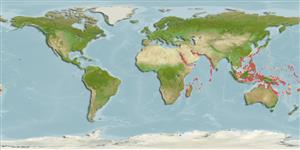
Indo-Pacific and the Mediterranean.
الطول عند النضج الأول / الحجم / وزن / العمر
النضج: Lm ? range ? - ? cm
Common in the lower eulittoral zone under rock slabs and boulders (Ref. 102838). Members of the family Asterinidae are very opportunistic feeders, feeding indiscriminately on small epifaunal organisms, detritus, decaying animals and plants, and live algae (Ref. 108108). Deposit feeder (Ref. 90951). Found in waters less than 30m. Associated with coral communities. Hides under rocks during the day. Feeds on bacterial film (Ref. 129602).
دورة الحياة وسلوك التزاوج
النضج | التكاثر | وضع البيض | بيض | الخصوبة | اليرقات
Members of the class Asteroidea exhibit both asexual (regeneration and clonal) and sexual (gonochoric) means of reproduction. Life cycle: Embryos hatch into planktonic larvae and later metamorphose into pentamorous juveniles which develop into young sea stars with stubby arms.
Koukouras, A. and M.-S. Kitsos 2010 Echinoderms. pp.288-296 In Coll, M., et al., 2010. The biodiversity of the Mediterranean Sea: estimates, patterns, and threats. PLoS ONE 5(8):36pp. (مرجع 85345)
حالة القائمة الحمراء للاتحاد الدولي لحفظ الطبيعة والموارد الطبيعية
(مرجع 130435: Version 2025-2 (Global))
حالته حسب اتفاقية سايتس (مرجع 108899)
Not Evaluated
Not Evaluated
خطر للأنسان
Harmless
استخدامات بشرية
FAO - Publication: search | FishSource |
أدوات
مزيد من المعلومات
الديناميكيات السكانيةنمو
الحد الأقصى للأعمار/الأحجام
علاقة الطول بالوزن.
علاقة الطول بالطول.
الطول- الترددات
التحويل الجماعي
الوفرة
دورة الحياةالتكاثرالنضجالخصوبةوضع البيضبيضتطور البيضةاليرقات علم وظائف الأعضاءاستهلاك الأوكسجين
ذات الصلة بالبشرطوابع بريدية وعملات معدنية ومتنوعة
مصادر علي الأنترنت
تقديرات تستند إلى النماذج
ضعف الصيد
(مرجع 71543) |
(0 of 100). |