Bivalvia |
Venerida |
Mactridae
Ambiente: milieu / zona climática / intervalo de profundidade / gama de distribuição
Ecologia
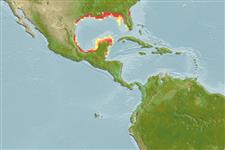
Benthic; estuarina; intervalo de profundidade 0 - 124 m (Ref. 104339), usually 0 - 2 m (Ref. 104339). Tropical; ? - 15°C (Ref. 104336); 31°N - 17°N, 98°W - 81°W
Western Atlantic: The Gulf of Mexico from Campeche to Florida, north to Chesapeake Bay, Maryland. Introduced in Hudson River, Belgium and Poland.
Comprimento na primeira maturidade / Tamanho / Peso / Idade
Maturidade: Lm ?, range 1 - ? cm Max length : 9.4 cm SHL macho/indeterminado; (Ref. 104339); Idade máx. registada: 15 anos (Ref. 104339)
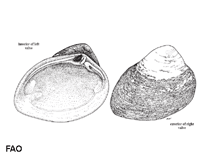
Shell oval, heavy, very thick. Hinge with lateral teeth transversally striated. Pallial sinus reduced. Umbones anterior, pointing inward and in anterior direction. Periostracum strong and smooth. Colour: externally dirt white, internally glossy white with slight blue-grey tinge; periostracum grey-brown (Ref. 271).
Maximum depth range from Ref. 104365. Lives in low salinity waters, found predominantly in estuaries (Ref. 121904). Also in salt marsh (Ref. 104365). Subtidal (Ref. 104487). It is found infaunal in sandy mud, in very low salinity brackish water (Ref. 271). Habitats have high water turbidity. Found in soft substrates which are a mixture of sand, mud and vegetation (Refs. 104240, 104487). A non-selective filter-feeder which turns substantial quantities of plant detritus and phytoplankton into clam biomass. Also obtains nutrition from sediments via direct ingestion or by feeding on bacteria. Predators include fish, crabs, gastropods and ducks (Ref. 104240).
Life cycle: Embryos develop into free-swimming trocophore larvae, succeeded by the bivalve veliger, resembling a miniature clam (Ref. 833). Spawning is continuous throughout the year (Ref. 104339).
Carpenter, K.E. (ed.) 2002 The living marine resources of the Western Central Atlantic. Volume 1: Introduction, molluscs, crustaceans, hagfishes, sharks, batoid fishes, and chimaeras. FAO Species Identification Guide for Fishery Purposes and American Society of Ichthyologists and Herpetologists Special Publication No. 5, Rome. 600p. (Ref. 271)
Categoria na Lista Vermelha da IUCN
(Ref. 130435: Version 2025-2 (Global))
Categoria CITES (Ref. 108899)
Not Evaluated
Not Evaluated
Ameaça para o homem
Utilização humana
Pescarias: espécies comerciais
FAO - Publication: search | FishSource | Sea Around Us
Ferramentas
Mais informação
FisiologiaConsumo de oxigénio
Relacionado com o ser humanoSelos, moedas, diversos.
Fontes da internet
Estimativas baseadas em modelos
Resiliência
(Ref. 69278): |
Muito baixo, tempo mínimo de duplicação da população maior que 14 anos (K=0.01-0.03; tmax=15) |
Vulnerabilidade da pesca
(Ref. 71543) |
Moderate to high vulnerability (52 of 100). |
Categoria de preço
(Ref. 80766): |
Low. |