Mammalia |
Cetartiodactyla |
Balaenopteridae
Milieu: milieu / Klimaatzone / Diepte / verspreidingsgebied
Ecologie
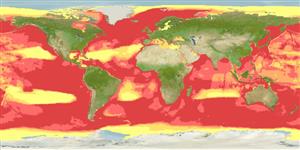
Pelagisch; oceanodroom (Ref. 75906); diepte 0 - 616 m (Ref. 83346). Tropical; 90°N - 90°S, 180°W - 180°E
Circumglobal. [Arabian Sea population: EN, D; Oceania population: EN, A1ad: IUCN 2010 (Ref. 84930)].
Lengte bij maturiteit / Grootte / Gewicht / Leeftijd
Maturiteit: Lm ? range ? - ? cm Max length : 1,890 cm TL mannelijk / geslacht onbekend; (Ref. 936); max. gepubliceerd gewicht: 35.0 t (Ref. 1394)
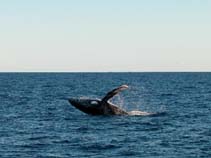
They migrate from tropics (breeding areas) to polar or sub-polar regions, reaching the ice edges in both hemispheres (feeding areas); their migrations take them through oceanic zones (Ref. 1394). Maximum depth from Ref. 122827. Feed and breed in coastal waters, often near human population centres, and this helps make them one of the most familiar of the large whales. Feeds on krill and small schooling fish (Ref. 1394). According to a study in the Philippines, Babuyan Islands (121°36’00", 19°18’00) was verified as a breeding ground for this species, and humpback whale songs were recorded during this season. Social groups observed were lone adult, mother-calf pairs, two adults, mother-calf-escort, and a surface active mating group of 3 to 4 individuals (Ref. 77119). Adults length 1600 cm in Ref. 1394. Threats to this species are dynamite and cyanide fishing, pollution, and intrusion of foreign commercial fishing vessels (Ref. 77119), unregulated fishing activities of Taiwanese vessels, i.e. long-line and drift net fishing, and unconfirmed reports of pirate whaling (Ref. 77118). There were nine distinctive themes of humpback whale songs identified wherein 7 of which were common in the Philippines and Hawaii (Ref. 77118). Feeds and breeds in coastal waters, often near human population centres, and this helps make them one of the most familiar of the large whales. They migrate from tropics (breeding areas) to polar or sub-polar regions, reaching the ice edges in both hemispheres (feeding areas); their migrations take them through oceanic zones (Ref. 1394). They prefer warm shallow waters to breed, usually near offshore reefs, islands, or continental shores. Feeding grounds are characterized by cold, productive, shallow waters (Ref. 122680). Feeds on krill and small schooling fish (Ref. 1394). According to a study in the Philippines, Babuyan Islands (121°36’00", 19°18’00) was verified as a breeding ground for this species, and humpback whale songs were recorded during this season. Social groups observed were lone adult, mother-calf pairs, two adults, mother-calf-escort, and a surface active mating group of 3 to 4 individuals (Ref. 77119).
Levenscyclus en paargedrag
Maturiteit | Voortplanting | Paaien | Eieren | Fecunditeit | Larven
Babuyan Islands (121°36’00", 19°18’00"), Philippines was verified as a breeding ground for this species. During this season social groups observed were lone adult, mother-calf pairs, two adults, mother-calf-escort, and a surface active mating group of 3 to 4 individuals (Ref. 77119). Associated activities involved cows with young calves escorted by males, aggressive competitive behavior, and singing (Ref. 78067).
Jefferson, T.A., S. Leatherwood and M.A. Webber 1993 FAO species Identification Guide: Marine Mammals of the World. Rome, FAO. 320 p. + 587 figures. (Ref. 1394)
Status op de Rode Lijst van het IUCN
(Ref. 130435: Version 2025-2 (Global))
CITES status (Ref. 108899)
Gevaar voor de mens
Gebruik door de mens
Visserij: commercieel
FAO - visserij: soortsprofiel, landings search; Publication: search | FishSource | Sea Around Us
Tools
Meer informatie
FysiologieZuurstofverbruik
Menselijk gerelateerdPostzegels, munten, diversen.
Internetbronnen
Schattingen op basis van modellen
Weerstandsvermogen
(Ref. 69278): |
Hoog, minimale populatieverdubbelingstijd minder dan 15 maanden (K=0.25-1.96; tm=6) |
Kwetsbaarheid van de visserij
(Ref. 71543) |
High vulnerability (60 of 100). |
Prijsklasse
(Ref. 80766): |
Unknown. |