Malacostraca |
Decapoda |
Ocypodidae
Milieu: milieu / Klimaatzone / Diepte / verspreidingsgebied
Ecologie
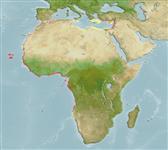
Benthic; diepte 0 - 1 m (Ref. 435). Tropical; 37°N - 29°S, 26°W - 36°E
Eastern Atlantic and the Mediterranean: from Mauritania to Namibia and eastern Mediterranean. Tropical to subtropical.
Lengte bij maturiteit / Grootte / Gewicht / Leeftijd
Maturiteit: Lm ? range ? - ? cm Max length : 4.6 cm CL mannelijk / geslacht onbekend; (Ref. 435)
Maximum carapace width: 5.5 cm. Depth range is based on ecology (Ref. 435); to be replaced with a better reference. Semi-terrestrial (Ref. 105066). Considered an estuarine crab (Ref. 121901). Inhabits intertidal sandy beaches (Ref. 121900), making burrows above high water line. Occurs at the high tide mark (Ref. 435). Nocturnal Feeds on animal carcasses, picnic remains and vegetable matter. Also a predator of sea turtle eggs and hatchlings (Ref. 105066). Reported to mainly feed on ants and supplement its diet with crustaceans and drifting macroalgae (Ref. 105068).
Levenscyclus en paargedrag
Maturiteit | Voortplanting | Paaien | Eieren | Fecunditeit | Larven
Members of the order Decapoda are mostly gonochoric. Mating behavior: Precopulatory courtship ritual is common (through olfactory and tactile cues); usually indirect sperm transfer.
Fischer, W., G. Bianchi and W.B. Scott (eds.) 1981 True Crabs. 6: pag.var. In FAO species identification sheets for fishery purposes. Eastern Central Atlantic (fishing areas 34, 47; in part). Canada Funds-in-Trust. Ottawa, Department of Fisheries and Oceans Canada, by arrangement with the Food and AgriculturesOrganization of the United Nations, 1-7: pag.var. (Ref. 435)
Status op de Rode Lijst van het IUCN
(Ref. 130435: Version 2025-2 (Global))
CITES status (Ref. 108899)
Not Evaluated
Not Evaluated
Gevaar voor de mens
Gebruik door de mens
Visserij: commercieel
FAO - Publication: search | FishSource |
Tools
Meer informatie
LevenscyclusVoortplantingMaturiteitFecunditeitPaaienEierenOntwikkeling van de eierenLarven FysiologieZuurstofverbruik
Menselijk gerelateerdPostzegels, munten, diversen.
Internetbronnen
Schattingen op basis van modellen
Kwetsbaarheid van de visserij
(Ref. 71543) |
Low vulnerability (10 of 100). |
Prijsklasse
(Ref. 80766): |
Unknown. |