Bivalvia |
Cardiida |
Cardiidae
পরিবেশ: পরিবেশ / জলবায়ু অঞ্চল / গভীরতার পরিসীমা / বিতরণ পরিসীমা
বাস্তুসংস্থান
Benthic. Tropical; 23°C - 30°C (সূত্র 102835); 13°N - 9°S, 109°E - 139°E (সূত্র 106696)
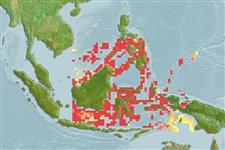
Western Central Pacific: Restricted in the tropical western Pacific. From Sabah, Malaysia to Palau, north to Philippines and south to Indonesia.
প্রথম পরিপক্কতার সময় দৈর্ঘ্য / আকৃতি / ওজন / বয়স
পরিপক্কতা : Lm ? range ? - ? cm Max length : 41.1 cm SHL পুরুষ/ লিঙ্গ অনিধর্ারিত ; (সূত্র 117184); common length : 20.0 cm SHL পুরুষ/ লিঙ্গ অনিধর্ারিত ; (সূত্র 348)
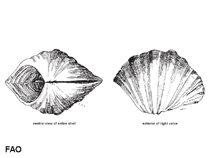
Its shell is thinner and smoother than that of H. hippopus, usually devoid of pigmentation, and more semi-circular in profile. The mantle is similar to that of H. hippopus (Rosewater, 1982), except that prominent papillae line the margins of the incurrent siphon.
Collected for food and shell (Ref. 348). Found in shallow waters. Young specimens often byssally attached to coral heads, mature specimens lack a byssus and lay unattached on the substrate (Ref. 348).
জীবনচক্র এবং প্রজনন আচরণ
পরিপক্কতা | প্রজনন | ডিম ছাড়া | ডিমসমূহ | ডিম্বধারন ক্ষমতা | শুককীট
Broadcast spawners. Life cycle: Embryos develop into free-swimming trocophore larvae, succeeded by the bivalve veliger, resembling a miniature clam (Ref. 833).
Poutiers, J.M. 1998 Bivalves. Acephala, Lamellibranchia, Pelecypoda. p. 123-362. In Carpenter, K. E. and V. H. Niem. 1998. FAO species identification guide for fishery purposes. The living marine resources of the Western Central Pacific. Volume 1. Seaweeds, corals, bivalves, and gastropods. Rome, FAO. (সূত্র 348)
আইইউসিএন রেড লিস্টের অবস্থা
(সূত্র 130435: Version 2025-2 (Global))
CITES অবস্থা (সূত্র 108899)
Not Evaluated
মানুষের জন্য হুমকি
Harmless
মানুষের ব্যবহার
মৎস্য: বাণিজ্যিক
FAO - Aquaculture Systems: production search; Publication: search | FishSource | আমাদের চতুর্পাশ্বের সাগর
হাতিয়ার
আরো তথ্য
জীবনচক্রপ্রজনন পরিপক্কতা ডিম্বধারন ক্ষমতা ডিম ছাড়া ডিমসমূহডিমের বিকাশশুককীট শারীরবিদ্যাঅম্লজান ব্যবহার
মানব সম্পর্কিতডাকটিকিট, মুদ্রা, বিবিধ।
ইন্টারনেট সুত্র
মডেলের উপর ভিত্তি করে অনুমান
স্থিতিস্থাপক
(Ref. 69278): |
নিম্ন/ , সর্বনিম্ন প্রজন দ্বিগুনের সময় ৪.৪-১৪ বৎসর (K=0.13) |
মাছ ধরার ঝুঁকিপূর্ণতা
(সূত্র 71543) |
Moderate to high vulnerability (51 of 100). |
মূল্য বিভাগ
(সূত্র 80766): |
Unknown. |