Gastropoda |
Aplysiida |
Aplysiidae
Milieu: milieu / Klimaatzone / Diepte / verspreidingsgebied
Ecologie
Benthic; diepte 0 - 50 m (Ref. 7727). Tropical
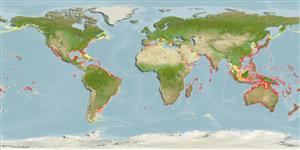
Circumglobal tropical, temperate seas and the Mediterranean Sea.
Lengte bij maturiteit / Grootte / Gewicht / Leeftijd
Maturiteit: Lm ? range ? - ? cm Max length : 19.0 cm TL mannelijk / geslacht onbekend; (Ref. 126605); max. gepubliceerd gewicht: 41.00 g (Ref. 126605); max. gerapporteerde leeftijd: 1.00 Jaren (Ref. 126605)
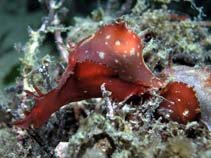
Sea hares have annual life cycles (Ref. 126605). Found roaming around various species of algae. A nocturnal species (Ref. 822). Common in intertidal and subtidal habitats to about 5 m in depth. A specialized herbivore and feeds largely on red algae (Ref. 866). Known from depths of 0 to 50 m (Ref. 7727); and from intertidal rock pools, and immediate subtidal on alga-covered reefs (Ref. 337). Also on seagrass (Ref. 109264).
Levenscyclus en paargedrag
Maturiteit | Voortplanting | Paaien | Eieren | Fecunditeit | Larven
Members of the order Anaspidea are mostly simultaneous hermaphrodites.
Burn, R. 2006 A checklist and bibliography of the Opisthobranchia (Mollusca: Gastropoda) of Victoria and the Bass Strait, southeastern Australia. Museum Victoria Science Reports 10:1-42. (Ref. 7727)
Status op de Rode Lijst van het IUCN
(Ref. 130435: Version 2025-2 (Global))
CITES status (Ref. 108899)
Not Evaluated
Not Evaluated
Gevaar voor de mens
Gebruik door de mens
FAO - Publication: search | FishSource |
Tools
Meer informatie
Trofische ecologieVoedsel (prooien)
Dieetsamenstelling
Voedselconsumptie
Predatoren
PopulatiedynamicaGroei
Max. leeftijden / maten
Lengte-gewicht rel.
Lengte-lengte rel.
Lengtefrequenties
Massaconversie
Abundantie
LevenscyclusVoortplantingMaturiteitFecunditeitPaaienEierenOntwikkeling van de eierenLarven FysiologieZuurstofverbruik
Menselijk gerelateerdPostzegels, munten, diversen.
Internetbronnen
Schattingen op basis van modellen
Kwetsbaarheid van de visserij
(Ref. 71543) |
Low vulnerability (10 of 100). |
Prijsklasse
(Ref. 80766): |
Unknown. |