Holothuroidea |
Holothuriida |
Holothuriidae
ສະພາບແວດລ້ອມ: ສະພາບແວດລ້ອມ / ເຂດດິນຟ້າອາກາດ / ລະດັບຄວາມເລິກ / ຂອບເຂດການແຈກຢາຍ
ນິເວດວິທະຍາ
ກ່ຽວກັນຫີນ; ລະດັບຄວາມເລິກ 0 - 45 m (ເອກະສານອ້າງອີງ 800). Tropical; 30°N - 35°S, 32°E - 128°W (ເອກະສານອ້າງອີງ 97480)
Indo-Pacific.
ຄວາມຍາວໃນການເຕີບໂຕເຕັມຄັ້ງທໍາອິດ / ຂະໜາດ / ນ້ຳໜັກ / ອາຍຸ
ການຈະເລີນເຕັມໄວ: Lm ? range ? - ? cm Max length : 35.0 cm TL ຕົວຜູ້/ບໍ່ມີເພດ; (ເອກະສານອ້າງອີງ 122); common length : 20.0 cm TL ຕົວຜູ້/ບໍ່ມີເພດ; (ເອກະສານອ້າງອີງ 122); ນ້ຳໜັກສູງສຸດທີ່ເຄຍຈັດພີມມາ: 300.00 g (ເອກະສານອ້າງອີງ 122)
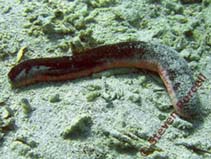
Mean live weight 200 to 300 g; body-wall thickness 0.3 cm. Body cylindrical, elongate, eight rounded ends. Tegument rough. Podia sparse on bivium, ending in a small disc of around 100 micrometer in diameter; podia on trivium numerous, short and stout, distributed on the radii and interradii, their calcareous disc around 460 micrometer in diameter. Mouth ventral, surrounded by 20 grey tentacles. Anus sub dorsal. Calcareous ring with large radial pieces and narrow interradials. Cuvierian tubules absent. A characteristic black or dark mediodorsal band; coloration lighter laterally; trivium lighter, with small, dark dots. Spicules on tegument with tables and rosettes; tables with circular small disc, having a single hole in the middle, and bearing a spire ending in spines which may form a Maltese crown; presence of rosettes with holes (2 small and 2 larger holes); a second form of rosette with 6 holes and small perforated plates mostly found in the dorsal tegument; ventral podia with large plates and rods; dorsal podia with nodose rods or showing holes at their ends.
Not processed product looks similar to that of Holothuria atra and is of low commercial value. A common shallow water species; mostly on inner and outer flats of coastal reefs, back reefs, or shallow coastal lagoons; specimens from barrier reefs have been reported to have a brown bivium and whitish trivium. Most abundant on sandy-muddy grounds with rubble or coral patches and in seagrass beds (Refs. 122, 129602). Also common on sandy-silt sand mixed with coral rubble (Ref. 92930) and those with fine and coarse sand on seagrass (Ref. 129602). Mean population density around 0.1 per square meter or not exceeding 0.1 per square meter (Ref. 122).
ວົງຈອນຊີວິດ ແລະພຶດຕິກໍາການຫາຄູ່
ການຈະເລີນເຕັມໄວ | ການສືບພັນ | ການວາງໄຂ່ | ໄຂ່ | ຄວາມດົກຂອງໄຂ່ປາ | ຕົວອ່ອນ
Conand, C. 1998 Holothurians (sea cucumbers, Class Holothuroidea). p. 1157-1190. In Carpenter, K.E. and V.H. Niem (eds.) FAO Species Identification Guide for Fishery Purposes. The Living Marine Resources of the Western Central Pacific. Vol. 2. Cephalopods, crustaceans, holothurians and sharks. FAO Rome. (ເອກະສານອ້າງອີງ 122)
ສະຖານະພາບບັນຊີແດງຂອງ IUCN
(ເອກະສານອ້າງອີງ 130435: Version 2025-2 (Global))
ສະຖານະ CITES (ເອກະສານອ້າງອີງ 108899)
Not Evaluated
CMS (ເອກະສານອ້າງອີງ 116361)
Not Evaluated
ໄພຂົ່ມຂູ່ຕໍ່ມະນຸດ
Harmless
ການນໍາໃຊ້ຂອງມະນຸດ
ການປະມົງ: ທີ່ເປັນການຄ້າໜ້ອຍ
FAO - Publication: search | FishSource | ທະເລອ້ອມຂ້າງພວກເຮົາ
ເຄື່ອງມື
ຂໍ້ມູນຕື່ມອີກ
ວົງຈອນຊີວິດການສືບພັນການຈະເລີນເຕັມໄວຄວາມດົກຂອງໄຂ່ປາການວາງໄຂ່ໄຂ່ການພັດທະນາໄຂ່ຕົວອ່ອນ ຟີຊິກສາດການບໍລິໂພກອົກຊີເຈນ
ມະນຸດທີ່ກ່ຽວຂ້ອງສະແຕມ, ຫຼຽນ, ອື່ນໆ.
ແຫຼ່ງອີນເຕີເນັດ
ການຄາດຄະເນໂດຍອີງໃສ່ແບບຈໍາລອງ
ຄວາມສ່ຽງຕໍ່ການຫາປາ
(ເອກະສານອ້າງອີງ 71543) |
Low vulnerability (25 of 100). |
ປະເພດລາຄາ
(ເອກະສານອ້າງອີງ 80766): |
Unknown. |
Nutrients
|
Calcium = 126 [75, 177] mg/100g; Iron = 4.79 [1.67, 7.92] mg/100g; Protein = 16.6 [15.4, 17.8] %; Omega3 = 0.331 [0.263, 0.400] g/100g; Selenium = 57.8 [48.5, 67.2] μg/100g; VitaminA = 0 μg/100g; Zinc = 1.97 [0.92, 3.02] mg/100g (wet weight); based on nutrient studies. |