Malacostraca |
Stomatopoda |
Squillidae
สิ่งแวดล้อม : สิ่งแวดล้อม / เขตภูมิอากาศ / ระดับความลึก / ระยะการกระจายสินค้า
นิเวศวิทยา
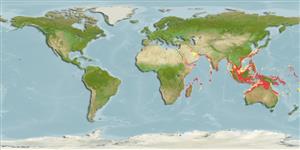
Benthic; ระดับความลึก 0 - 100 m (อ้างอิง 99185). Tropical; 35°N - 28°S, 32°E - 134°W
Indo-West Pacific: East African waters to the Red Sea Taiwan. One of the most common squillids in the western part of its distribution range.
ความยาวเมื่อครบกำหนดครั้งแรก / ขนาด / น้ำหนัก / อายุ
วัยเจริญพันธุ์: Lm ? range ? - ? cm Max length : 17.0 cm TL เพศผู้/กระเทย; (อ้างอิง 92)
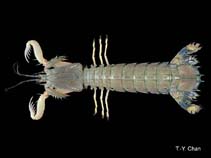
A very common shore species that burrows in level-bottom habitats (Ref. 92). Prefers sandy-muddy bottoms (Ref. 87055). May deposit feed as well (Ref. 105093).
วงจรชีวิตและพฤติกรรมการผสมพันธุ์
วัยเจริญพันธุ์ | การสืบพันธุ์ | การวางไข่ | เซลสืบพันธ์ของเพศเมีย(ไข่) | ความดกของไข่ | ตัวอ่อน
Some members of the order Stomatopoda pair for life and some come together only to mate. Males produce sperm ducts rather than spermatophores; females can brood a maximum of 50,000 eggs. Life cycle: Eggs hatch to a planktonic zoea which lasts for 3 months.
Manning, R.B. 1998 Stromatopods. p. 827-849. In Carpenter, K.E. and V.H. Niem (eds.) FAO Species Identifidication Guide for Fishery Purposes. The Living Marine Resources of the Western Central Pacific. Vol. 2. Cephalopods, crustaceans, holothurians and sharks. FAO Rome. (อ้างอิง 92)
สถานะบัญชีแดงของ IUCN
(อ้างอิง 130435: Version 2025-2 (Global))
สถานะไซเตส (อ้างอิง 108899)
Not Evaluated
CMS (อ้างอิง 116361)
Not Evaluated
ภัยคุกคามต่อมนุษย์
Harmless
การใช้ของมนุษย์
FAO - Publication: search | FishSource |
เครื่องมือ
ข้อมูลเพิ่มเติม
วงจรชีวิตการสืบพันธุ์วัยเจริญพันธุ์ความดกของไข่การวางไข่เซลสืบพันธ์ของเพศเมีย(ไข่)การพัฒนาไข่ตัวอ่อน เกี่ยวข้องกับมนุษย์แสตมป์ เหรียญ อื่นๆ
แหล่งที่มาจากอินเตอร์เน็ต
การประมาณค่าตามแบบจำลอง
ความสามารถในการกลับคืนสู่ปกติ
(Ref. 69278): |
ความสูง, เวลาต่ำสุดที่จะทำให้ประชากรเพิ่มขึ้นเป็น 2 เท่าใช้เวลาน้อยกว่า 15 เดือน (K=4.44-6.6) |
ความเสี่ยงต่อการตกปลา
(อ้างอิง 71543) |
Low vulnerability (10 of 100). |
หมวดหมู่ราคา
(อ้างอิง 80766): |
Very high. |