Aves |
Procellariiformes |
Diomedeidae
Milieu: milieu / Klimaatzone / Diepte / verspreidingsgebied
Ecologie
Others. Temperate
Indo-Pacific, Atlantic Ocean, Mediterranean and the Antarctic. Subtropical to polar.
Lengte bij maturiteit / Grootte / Gewicht / Leeftijd
Maturiteit: Lm ? range ? - ? cm Max length : 135 cm TL mannelijk / geslacht onbekend; (Ref. 8812); common length : 107 cm TL mannelijk / geslacht onbekend; (Ref. 8812); max. gepubliceerd gewicht: 8.8 kg (Ref. 356)
Culmen: 16.55 cm; tarsus: 15.14 cm; wing: 68.27 cm.
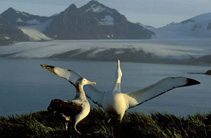
Total Length: 107 to 135 cm (Ref. 8812); with the largest wingspan of any living bird (Ref. 82700). Total annual breeding population is 14,000 pairs or about 100,000 birds. They are known to breed bienially (Ref. 84934). Macquarie population endangered; Australian Endangered Species Protection Act 1992 (Ref. 8812). Increase in mortality is caused by drowning on long-lines (Ref. 84934). Oceanic; predominantly offshore over waters >1000m depth (Ref. 89480). Breeds in loose colonies on grassy headlands and plateaux of oceanic islands. Follows ships (Ref. 91362). Feeds by scavenging and surface seizing (Ref. 89480). They have highly acidic stomachs (<2) pH that allows rapid digestion (Ref. 104317).
Levenscyclus en paargedrag
Maturiteit | Voortplanting | Paaien | Eieren | Fecunditeit | Larven
Lepage, D. 2007 Avibase -the World Bird Database. http://www.bsc-eoc.org/avibase/avibase.jsp [accessed 09/07/2007]. (Ref. 7816)
Status op de Rode Lijst van het IUCN
(Ref. 130435: Version 2025-2 (Global))
CITES status (Ref. 108899)
Not Evaluated
Gevaar voor de mens
Gebruik door de mens
FAO - Publication: search | FishSource |
Tools
Meer informatie
PopulatiedynamicaGroeiMax. leeftijden / matenLengte-gewicht rel.Lengte-lengte rel.LengtefrequentiesMassaconversieAbundantie LevenscyclusVoortplantingMaturiteitFecunditeitPaaienEierenOntwikkeling van de eierenLarven FysiologieZuurstofverbruik
Menselijk gerelateerdPostzegels, munten, diversen.
Internetbronnen
Schattingen op basis van modellen
Weerstandsvermogen
(Ref. 69278): |
Hoog, minimale populatieverdubbelingstijd minder dan 15 maanden (K=3.38-8.82) |
Kwetsbaarheid van de visserij
(Ref. 71543) |
Very high vulnerability (81 of 100). |
Prijsklasse
(Ref. 80766): |
Unknown. |