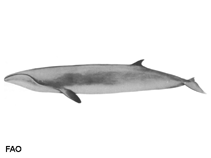
Mammalia |
Cetartiodactyla |
Neobalaenidae
Milieu: milieu / Klimaatzone / Diepte / verspreidingsgebied
Ecologie
Pelagisch. Polar; 0°N - 90°S, 180°W - 180°E
Indo-Pacific, Southern Atlantic and the Antarctic: South Atlantic at 33°40'S, 00°56'E, and at 32°56'S, 12°42'E (Ref. 1522), Southern Hemisphere, between the Antarctic Convergence (Ref. 1394).
Lengte bij maturiteit / Grootte / Gewicht / Leeftijd
Maturiteit: Lm ? range ? - ? cm Max length : 610 cm TL mannelijk / geslacht onbekend; (Ref. 1394); 650 cm TL (female); max. gepubliceerd gewicht: 4.5 t (Ref. 804)
Feeds on copepods (Ref. 1394). Feeds on copepods (Ref. 1394).
Levenscyclus en paargedrag
Maturiteit | Voortplanting | Paaien | Eieren | Fecunditeit | Larven
Jefferson, T.A., S. Leatherwood and M.A. Webber 1993 FAO species Identification Guide: Marine Mammals of the World. Rome, FAO. 320 p. + 587 figures. (Ref. 1394)
Status op de Rode Lijst van het IUCN
(Ref. 130435: Version 2025-2 (Global))
CITES status (Ref. 108899)
Gevaar voor de mens
Gebruik door de mens
Visserij: commercieel
FAO - Publication: search | FishSource | Sea Around Us
Tools
Meer informatie
Trofische ecologieVoedsel (prooien)
Dieetsamenstelling
Voedselconsumptie
Predatoren
LevenscyclusVoortplantingMaturiteitFecunditeitPaaienEierenOntwikkeling van de eierenLarven FysiologieZuurstofverbruik
Menselijk gerelateerdPostzegels, munten, diversen.
Internetbronnen
Schattingen op basis van modellen
Kwetsbaarheid van de visserij
(Ref. 71543) |
Very high vulnerability (90 of 100). |
Prijsklasse
(Ref. 80766): |
Unknown. |