Cephalopoda |
Octopoda |
Argonautidae
Môi trường: môi trường / vùng khí hậu / Mức độ sâu / phạm vi phân phối
Sinh thái học
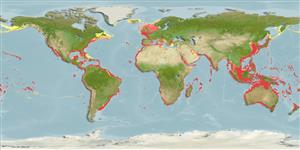
Tầng nổi; mức độ sâu 0 - 200 m (Tài liệu tham khảo 83938). Tropical; 50°N - 42°S, 180°W - 180°E (Tài liệu tham khảo 275)
Circumglobal in tropical and warm temperate seas.
Chiều dài lúc trưởng thành đầu tiên / Bộ gần gũi / Khối lượng (Trọng lượng) / Tuổi
Chín muồi sinh dục: Lm ? range ? - ? cm Max length : 72.6 cm TL (female)
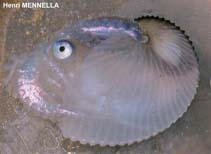
Maximum total length: male, 1.5 to 2.0 cm. Maximum length of shell, 30 cm in females; males are of dwarf size, only 1.5 to 2 cm in total length (Ref. 275). Maximum total length 72.6 cm, and mantle length 14.14 cm for females (122434). Epipelagic (Ref. 83938). Females use the shell to trap air, gathered at the sea surface, to attain neutral buoyancy (Ref. 96968). Few shells found washed up on beaches (Ref. 88739).
Vòng đời và hành vi giao phối
Chín muồi sinh dục | Sự tái sinh sản | Đẻ trứng | Các trứng | Sự sinh sản | Ấu trùng
On contact with the female, it is presumed that the male autotomizes the hectocotylus. Multiple hectocotyli can persist in shells and mantle cavities of females for extended periods. Eggs of up to five different developmental stages may be present within a single shell (Ref. 96968). Females inhabit the shell of Nautilus for egg deposition and brooding (Ref. 98241).
Roper, C.F.E., M.J. Sweeney and C.E. Nauen 1984 FAO Species Catalogue. Vol. 3. Cephalopods of the world. An annotated and illustrated catalogue of species of interest to fisheries. FAO Fish. Synop. 125(3):277p. Rome: FAO. (Tài liệu tham khảo 275)
Tình trạng Sách đỏ IUCN
(Tài liệu tham khảo 130435: Version 2025-2 (Global))
tình trạng CITES (Tài liệu tham khảo 108899)
Not Evaluated
CMS (Tài liệu tham khảo 116361)
Not Evaluated
Mối đe dọa đối với con người
Sử dụng của con người
Các nghề cá: tính thương mại
FAO - Publication: search | FishSource |
Các công cụ
Thêm thông tin
Biến động dân sốSự sinh trưởngĐộ tuổi / kích thước tối đaChiều dài-trọng lượng tương đốiChiều dài-chiều dài tương đối.Chiều dài-tần sốChuyển đổi khối lượngSự phong phú Sinh lý họcThành phần ô-xy
Liên quan đến con ngườiTem, tiền xu, v.v.
Các nguồn internet
Ước tính dựa trên mô hình
Sự dễ bị tổn thương của nghề đánh cá
(Tài liệu tham khảo 71543) |
Moderate to high vulnerability (49 of 100). |
Loại giá
(Tài liệu tham khảo 80766): |
Unknown. |