Cephalopoda |
Octopoda |
Ocythoidae
Meio ambiente: milieu / Zona climática / intervalo de profundidade / faixa de distribuição
Ecologia
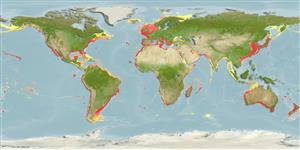
Pelágico(a,os,as); intervalo de profundidade 1 - 200 m (Ref. 110525). Subtropical
Northern and Southern Hemisphere. Subtropical to temperate.
Comprimento de primeira maturação / Tamanho / Peso / Idade
Maturidade: Lm ? range ? - ? cm Max length : 6.9 cm TL macho/indeterminado; (Ref. 96968); 96 cm TL (female)
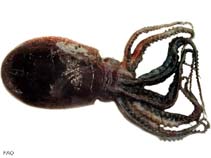
Female mantle length is 31 cm. Male mantle length is 3.0 cm (Ref. 96968). Maximum mantle length for females is 35 cm (Ref. 122360). Ocythoe are reported to be edible (Ref. 96968). Female Ocythoe sp. typically occupy near-surface waters, having been encountered in the upper 10 m and captured in plankton hauls and on hook and line. While male Ocythoe sp. have been collected in pelagic tows at the sea surface, they are not restricted to surface waters, having been collected in closing nets at 100 to 200 m. Species are reported to feed on pteropod and heteropod mollusks, sardines, and crustaceans (Ref. 96968).
Ciclo de vida ou comportamento de acasalamento
Maturidade | Reprodução | Desova | Ovos | Fecundidade | Larvas
Members of the class Cephalopoda are gonochoric. Male and female adults usually die shortly after spawning and brooding, respectively. Mating behavior: Males perform various displays to attract potential females for copulation. During copulation, male grasp the female and inserts the hectocotylus into the female's mantle cavity where fertilization usually occurs. Life cycle: Embryos hatch into planktonic stage and live for some time before they grow larger and take up a benthic existence as adults.
Cardoso, F. and C. Paredes 1998 La familia Ocythoidae (Cephalopoda: Octopoda) en el Perú. Revista Peruana de Biología. 5(2). Http://sisbib.unmsm.edu.pe/BVRevistas/biologia/v05_n2/ocythoid.htm. (Ref. 1979)
Status na Lista Vermelha da UICN
(Ref. 130435: Version 2025-2 (Global))
Status no CITES (Ref. 108899)
Not Evaluated
Not Evaluated
Ameaça para os humanos
Uso pelos humanos
Pescarias: sem interesse
FAO - Publication: search | FishSource |
Ferramentas
Mais informação
Ecologia TróficaItens alimentares (presas)Composição da dietaConsumo alimentarPredadores Ciclo de vidaReproduçãoMaturidadeFecundidadeDesovaOvosDesenvolvimento dos ovosLarvas FisiologiaConsumo de oxigênio
Relacionado a humanosSelos, moedas, diversos.
Fontes da internet
Estimativas baseadas em modelos
Vulnerabilidade da pesca
(Ref. 71543) |
High vulnerability (58 of 100). |
Categoria de preço
(Ref. 80766): |
Unknown. |