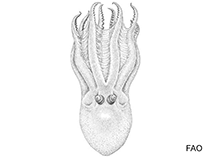
Cephalopoda |
Octopoda |
Amphitretidae
環境:環境 / 気候帯 / 深さの範囲 / 分布範囲
生態学
外洋の; 深さの範囲 100 - 2000 m (参照 96968). Tropical
Indo-Pacific. Tropical to subtropical.
初回成熟時の長さ / サイズ / 重さ / 年齢
成熟: Lm ? range ? - ? cm Max length : 30.0 cm TL オス/雌雄の選別がない; (参照 96968)
Mantle length is 10 cm (Ref. 96968). The upward orientation of the telescopic eyes is used for prey detection. Juveniles appear to occur in shallower water (Ref. 96968). Rare but seen in mangroves (Ref. 101170).
ライフサイクルと交尾行動
成熟 | 繁殖 | 放精 | 卵 | 生産力 | 幼生
Members of the class Cephalopoda are gonochoric. Male and female adults usually die shortly after spawning and brooding, respectively. Mating behavior: Males perform various displays to attract potential females for copulation. During copulation, male grasp the female and inserts the hectocotylus into the female's mantle cavity where fertilization usually occurs. Life cycle: Embryos hatch into planktonic stage and live for some time before they grow larger and take up a benthic existence as adults.
主な参考文献
参考文献 | コーディネーター | 協力者
Norman, M.D. and C.C. Lu 2000 Preliminary checklist of the cephalopods of the South China Sea. The Raffles Bulletin of Zoology 8:539-567. (参照 81752)
IUCNのレッドリストの状況は
(参照 130435: Version 2025-2 (Global))
ワシントン条約ステータス (参照 108899)
Not Evaluated
Not Evaluated
人間に対する脅威
人間の用途
FAO - Publication: search | FishSource |
用具
インターネットの情報源
モデルに基づく推定値
漁業の脆弱性
(参照 71543) |
Low vulnerability (20 of 100). |
価格帯
(参照 80766): |
Unknown. |