Cephalopoda |
Myopsida |
Loliginidae
পরিবেশ: পরিবেশ / জলবায়ু অঞ্চল / গভীরতার পরিসীমা / বিতরণ পরিসীমা
বাস্তুসংস্থান
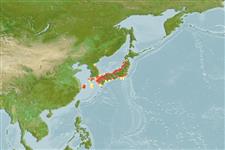
ভাসমান; গভীরতার পরিসীমা 0 - 100 m (সূত্র 275). Subtropical; 44°N - 30°N, 119°E - 144°E (সূত্র 275)
Northwest Pacific.
প্রথম পরিপক্কতার সময় দৈর্ঘ্য / আকৃতি / ওজন / বয়স
পরিপক্কতা : Lm ? range ? - ? cm Max length : 40.0 cm ML পুরুষ/ লিঙ্গ অনিধর্ারিত ; (সূত্র 275); সর্বোচ্চ উলি্ল্লখিত বয়স : 1.00 বৎসর (সূত্র 126831)
Also caught by set nets, trap nets, and blanket nets.
জীবনচক্র এবং প্রজনন আচরণ
পরিপক্কতা | প্রজনন | ডিম ছাড়া | ডিমসমূহ | ডিম্বধারন ক্ষমতা | শুককীট
Members of the class Cephalopoda are gonochoric. Male and female adults usually die shortly after spawning and brooding, respectively. Mating behavior: Males perform various displays to attract potential females for copulation. During copulation, male grasp the female and inserts the hectocotylus into the female's mantle cavity where fertilization usually occurs. Life cycle: Embryos hatch into planktonic stage and live for some time before they grow larger and take up a benthic existence as adults.
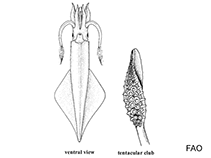
Roper, C.F.E., M.J. Sweeney and C.E. Nauen 1984 FAO Species Catalogue. Vol. 3. Cephalopods of the world. An annotated and illustrated catalogue of species of interest to fisheries. FAO Fish. Synop. 125(3):277p. Rome: FAO. (সূত্র 275)
আইইউসিএন রেড লিস্টের অবস্থা
(সূত্র 130435: Version 2025-2 (Global))
CITES অবস্থা (সূত্র 108899)
Not Evaluated
Not Evaluated
মানুষের জন্য হুমকি
মানুষের ব্যবহার
মৎস্য: বাণিজ্যিক
FAO - Publication: search | FishSource |
হাতিয়ার
আরো তথ্য
জীবনচক্রপ্রজনন পরিপক্কতা ডিম্বধারন ক্ষমতা ডিম ছাড়া ডিমসমূহডিমের বিকাশশুককীট শারীরবিদ্যাঅম্লজান ব্যবহার
মানব সম্পর্কিতডাকটিকিট, মুদ্রা, বিবিধ।
ইন্টারনেট সুত্র
মডেলের উপর ভিত্তি করে অনুমান
স্থিতিস্থাপক
(Ref. 69278): |
উচ্চ, সর্বনিম্ন প্রজন দ্বিগুনের সময় ১৫ মাস (K=3.99-4.87; tmax=1) |
Rate of population increase
|
Prior r = 0.49, 95% CL = 0.32 - 0.74, Based on 1 data-limited stock assessment. |
মাছ ধরার ঝুঁকিপূর্ণতা
(সূত্র 71543) |
Low vulnerability (21 of 100). |
মূল্য বিভাগ
(সূত্র 80766): |
High. |