Cephalopoda |
Oegopsida |
Ommastrephidae | Ommastrephinae
สิ่งแวดล้อม : สิ่งแวดล้อม / เขตภูมิอากาศ / ระดับความลึก / ระยะการกระจายสินค้า
นิเวศวิทยา
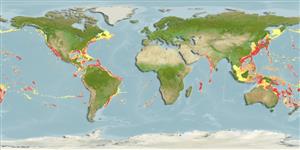
ผิวน้ำ; ระดับความลึก 0 - 1300 m (อ้างอิง 275). Tropical; 55°N - 38°S, 59°E - 8°E (อ้างอิง 275)
Circumglobal in tropical to temperate waters.
ความยาวเมื่อครบกำหนดครั้งแรก / ขนาด / น้ำหนัก / อายุ
วัยเจริญพันธุ์: Lm ?, range 10 - 20 cm Max length : 22.7 cm ML เพศผู้/กระเทย; (อ้างอิง 104052); 180 cm ML (female); น้ำหนักสูงสุดที่มีการรายงาน: 235.00 g (อ้างอิง 97142)
Geographical variability of size at maturity and size morphology is pronounced. Maximum size and size at maturity increases from the low latitudes to the high latitudes (Ref. 97142). Incidentally caught by jigs (Ref. 275). True bi-peripheral oceanic species. Epipelagic and upper mesopelagic; distributed from the surface to 400 m. Inhabits open waters, mostly over great depths of more than 200 m, and is neither associated with the bottom nor slope habitats. Subadult and adult squids occasionally observed at the surface at night. Inhabit depths greater than 50 to 100 m during the day. Low or moderately abundant locally (especially in the South Pacific Ocean between 30°S and 40°S). Life span is a maximum of 1 year. Spawning occurs throughout most of the year in the lower latitudes, and during spring and summer seasons in the higher latitudes. This species is an intermittent, multibatch spawner. Prey organisms include many species of pelagic crustaceans, heteropod mollusks and larvae and juveniles of teleost fishes and squids. The known predators include lancetfish (Alepisarus ferox), shark (Sphyrna zygaena), different species of tunas, the trichichthyid fish, orange roughy (Haplostethus atlanticus), sea birds and northern fur seal. Off eastern Australia, it is preyed upon by yellowfin tuna (Thunnus albacares) and swordfish (Xiphias gladius) in the warmer surface waters associated with the East Australia Current. Most subadult and adult squids are infested with helminth parasites: larvae of nematodes and cestodes and metacercariae of trematodes of the family Didymozoidae. All forms of parasites mainly are localized on the inner wall of the stomach (Ref. 97142).
วงจรชีวิตและพฤติกรรมการผสมพันธุ์
วัยเจริญพันธุ์ | การสืบพันธุ์ | การวางไข่ | เซลสืบพันธ์ของเพศเมีย(ไข่) | ความดกของไข่ | ตัวอ่อน
Members of the class Cephalopoda are gonochoric. Male and female adults usually die shortly after spawning and brooding, respectively. Mating behavior: Males perform various displays to attract potential females for copulation. During copulation, male grasp the female and inserts the hectocotylus into the female's mantle cavity where fertilization usually occurs. Life cycle: Embryos hatch into planktonic stage and live for some time before they grow larger and take up a benthic existence as adults.
Roper, C.F.E., M.J. Sweeney and C.E. Nauen 1984 FAO Species Catalogue. Vol. 3. Cephalopods of the world. An annotated and illustrated catalogue of species of interest to fisheries. FAO Fish. Synop. 125(3):277p. Rome: FAO. (อ้างอิง 275)
สถานะบัญชีแดงของ IUCN
(อ้างอิง 130435: Version 2025-2 (Global))
สถานะไซเตส (อ้างอิง 108899)
Not Evaluated
CMS (อ้างอิง 116361)
Not Evaluated
ภัยคุกคามต่อมนุษย์
การใช้ของมนุษย์
การประมง: ไม่มีผลประโยชน์
FAO - Publication: search | FishSource |
เครื่องมือ
ข้อมูลเพิ่มเติม
พลวัตของประชากรการเจริญเติบโตอายุสูงสุด / ขนาดความยาว-น้ำหนักสัมพันธ์ความยาว-ความยาวสัมพันธ์ความยาว-ความถี่การแปลงมวลอุดมสมบรูณ์ เกี่ยวข้องกับมนุษย์แสตมป์ เหรียญ อื่นๆ
แหล่งที่มาจากอินเตอร์เน็ต
การประมาณค่าตามแบบจำลอง
ความเสี่ยงต่อการตกปลา
(อ้างอิง 71543) |
Very high vulnerability (90 of 100). |
หมวดหมู่ราคา
(อ้างอิง 80766): |
Medium. |