Cephalopoda |
Sepiida |
Sepiidae
Entorno: milieu / zona climática / rango de profundidad / gama de distribución
Ecología
Benthic; rango de profundidad 0 - 50 m (Referencia 1695). Subtropical; 44°N - 22°N, 113°E - 141°E (Referencia 1695)
Distribución
Territories | Áreas FAO | Ecosistemas | Ocurrencias, apariciones | Introducciones
Northwest Pacific: Japan to South Korea and China.
Longitud en la primera madurez / Tamaño / Peso / Edad
Madurez: Lm ? range ? - ? cm Max length : 20.0 cm ML macho / no sexado; (Referencia 275); peso máximo publicado: 800.00 g (Referencia 2248)
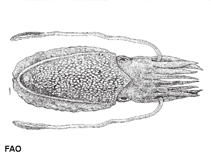
Shell: spineless, cuttlebone width 30 to 35% of length. Mantle: broadly oval, dorsal anterior margin triangular, obtuse; pore of caudal gland at posterior tip ventral to fins. Tentacular clubs elongate, with 20 minute subequal suckers in transverse rows. Arms relatively short. Arm suckers quadriserial; left arm IV hectocotylized in proximal third with the basal part modified by great reduction in size of suckers placed on a transversely ridged surface; ventral 2 rows of suckers close together, dorsal 2 rows separated. Colour: greyish brown. Dorsal mantle covered with white blotches or spots. Fins with pale reflective line along base. No spots or wine-coloured patches at base of fins.
It is a coastal demersal species, with depth up to about 50 m. Dominant cuttlefish caught around the Chekiang and Kiangsu, China. It is also important in the fisheries of Japan, South Korea and Taiwan, caught in large numbers in bottom trawls. In Japan, most of the catch is dried and marketed as ‘surume’ (Ref. 275).
Ciclo vital y comportamiento de apareamiento
Madurez | Reproducción | Puesta | Huevos | Fecundidad | Larva
Members of the class Cephalopoda are gonochoric. Male and female adults usually die shortly after spawning and brooding, respectively. Mating behavior: Males perform various displays to attract potential females for copulation. During copulation, male grasp the female and inserts the hectocotylus into the female's mantle cavity where fertilization usually occurs. Life cycle: Embryos hatch into planktonic stage and live for some time before they grow larger and take up a benthic existence as adults.
Jereb, P. and C.F.E. Roper (eds.) 2005 Cephalopods of the world. An Annotated and Illustrated catalogue of Cephalopod species known to date. Vol. 1. Chambered nautiluses and sepioids (Nautilidae, Sepiidae, Sepiolidae, Sepiadariidae, Idiosepiidae and Spirulidae). FAO Spec. Cat. Fish. Purp. 4(1):262p. Rome: FAO. (Referencia 1695)
Situación en la Lista Roja de la UICN
(Referencia 130435: Version 2025-2 (Global))
Estatus CITES (Referencia 108899)
Not Evaluated
CMS (Referencia 116361)
Not Evaluated
Amenaza para el ser humano
Usos humanos
Pesquerías: comercial
FAO - Publication: search | FishSource |
Herramientas
Más información
Ecología TróficaAlimentos (presas)
Composición de la dieta
consumo de alimento
Despredadores
FisiologíaConsumo del oxígeno
Relacionados con el ser humanoSellos, monedas, varios
Fuentes de Internet
Estimaciones basadas en modelos
Vulnerabilidad pesquera
(Referencia 71543) |
Low vulnerability (10 of 100). |
Categoría de precios
(Referencia 80766): |
High. |