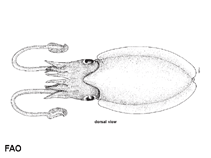
Cephalopoda |
Sepiida |
Sepiidae
環境:環境 / 気候帯 / 深さの範囲 / 分布範囲
生態学
Benthic; 汽水性の; 深さの範囲 16 - 500 m (参照 1695), usually 150 - 150 m (参照 1695). Tropical; 60°N - 15°S, 21°W - 37°E (参照 1695)
Eastern Atlantic and the Mediterranean: from UK to Angola.
初回成熟時の長さ / サイズ / 重さ / 年齢
成熟: Lm ? range ? - ? cm Max length : 7.2 cm ML オス/雌雄の選別がない; (参照 1695); 8.9 cm ML (female); 最大公表体重: 60.00 g (参照 1695)
Minimum depth range from Ref. 114857. Demersal (Ref. 1970). Sublittoral; most abundant at about 150 m depth, with sporadic records below 450 m (Ref. 1695). Found in the continental shelf and upper slope (Ref. 1970). Found in brackish waters of the Sea of Marmara, indicating its high degree of tolerance. Spends winter in deep waters between 200 to 400 m and migrates into shallow waters to spawn in spring and summer; optimally at water temperatures between 13° to 18°C (Ref. 1695). In the Gulf of Guinea, off west Africa, spawns in shallow inshore waters throughout the year (Refs. 417, 1695). Juveniles are found in an estuary (Ref. 122954). In the Mediterranean Sea, perennial presence of mature males and females suggest a continuous spawning period. Eggs (5 mm diameter) are laid in clusters of 12 to 25, on muddy substrates, attached to alcyonarians (sea fans), shells, etc. Hatched juveniles immediately assume a benthic lifestyle. Maturity at 1 year of age. Lifespan is at 12 to 18 months. Taken mainly as bycatch in the Mediterranean and west African trawl fisheries; a valuable local resource in the Mediterranean. Intensely fished in the Sicilian Channel. Marketed fresh and frozen (Ref. 1695).
ライフサイクルと交尾行動
成熟 | 繁殖 | 放精 | 卵 | 生産力 | 幼生
Members of the class Cephalopoda are gonochoric. Male and female adults usually die shortly after spawning and brooding, respectively. Mating behavior: Males perform various displays to attract potential females for copulation. During copulation, male grasp the female and inserts the hectocotylus into the female's mantle cavity where fertilization usually occurs. Life cycle: Embryos hatch into planktonic stage and live for some time before they grow larger and take up a benthic existence as adults.
主な参考文献
参考文献 | コーディネーター | 協力者
Jereb, P. and C.F.E. Roper (eds.) 2005 Cephalopods of the world. An Annotated and Illustrated catalogue of Cephalopod species known to date. Vol. 1. Chambered nautiluses and sepioids (Nautilidae, Sepiidae, Sepiolidae, Sepiadariidae, Idiosepiidae and Spirulidae). FAO Spec. Cat. Fish. Purp. 4(1):262p. Rome: FAO. (参照 1695)
IUCNのレッドリストの状況は
(参照 130435: Version 2025-2 (Global))
ワシントン条約ステータス (参照 108899)
Not Evaluated
Not Evaluated
人間に対する脅威
人間の用途
水産業: 商業
FAO - Publication: search | FishSource |
用具
インターネットの情報源
モデルに基づく推定値