Cephalopoda |
Octopoda |
Octopodidae | Octopodinae
पर्यावरण: पर्यावरण / जलवायु क्षेत्र / गहराई सीमा / वितरण सीमा
पारिस्थितिकी
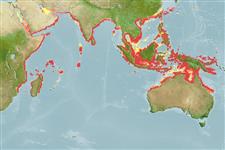
Benthic; गहराई सीमा 0 - 50 m (संदर्भ 275). Tropical; 28°N - 23°S, 35°E - 155°E (संदर्भ 275)
Indo-West Pacific: from Mozambique to China and the Philippines.
प्रथम परिपक्वता पर लंबाई / आकार / वज़न / आयु
परिपक्व अवधि: Lm ? range ? - ? cm Max length : 100.0 cm TL पुल्लिंग / अलिंग; (संदर्भ 96968); अधिकतम प्रकाशित वज़न: 2.0 kg (संदर्भ 275)
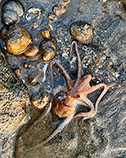
A moderate to large species characterized by: 1) water pouches, 2) an arm formula of I.II.III.IV, 3) a rudimentary ligula without a calamus in males, and 4) little apparent skin sculpture.
It's mantle length is 18 cm (Ref. 96968). It is a bottom-dwelling species, found mainly in intertidal coralline areas (Ref. 128042). Occurs in shallow subtidal areas on soft sediment substrates (Ref. 96968).
Members of the class Cephalopoda are gonochoric. Male and female adults usually die shortly after spawning and brooding, respectively. Mating behavior: Males perform various displays to attract potential females for copulation. During copulation, male grasp the female and inserts the hectocotylus into the female's mantle cavity where fertilization usually occurs. Life cycle: Embryos hatch into planktonic stage and live for some time before they grow larger and take up a benthic existence as adults.
Roper, C.F.E., M.J. Sweeney and C.E. Nauen 1984 FAO Species Catalogue. Vol. 3. Cephalopods of the world. An annotated and illustrated catalogue of species of interest to fisheries. FAO Fish. Synop. 125(3):277p. Rome: FAO. (संदर्भ 275)
आईयूसीएन रेड लिस्ट स्थिति
(संदर्भ 130435: Version 2025-2 (Global))
CITES स्थिति (संदर्भ 108899)
Not Evaluated
CMS (संदर्भ 116361)
Not Evaluated
मनुष्यों के लिए ख़तरा
मानव उपयोग
मात्स्यिकी: व्यापारिक
FAO - Publication: search | FishSource |
साधन
अधिक जानकारी
ट्रॉफिक पारिस्थितिकीखाद्य पदार्थ (शिकार)
संघटक आहार
आहार खपत
परभक्षी
फिजियोलॉजीप्राणवायु की खपत
मानव संबंधीटिकट, सिक्के, विविध.
इंटरनेट स्रोत
मॉडल पर आधारित अनुमान
लौटाव
(Ref. 69278): |
ऊंचा, न्यूनतम जनसंख्या दुगनी समय अवलागत 15 महीने। (K=0.91) |
मछली पकड़ने की भेद्यता
(संदर्भ 71543) |
Low to moderate vulnerability (35 of 100). |
मूल्य श्रेणी
(संदर्भ 80766): |
High. |