Hexacorallia |
Scleractinia |
Pocilloporidae
Lingkungan: lingkungan / zona iklim / kisaran kedalaman / jangkauan distribusi
Ekologi
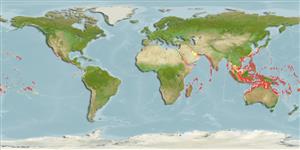
Berasosiasi dengan karang; kisaran kedalaman 0 - 54 m (Acuan 269). Tropical; 36°N - 31°S, 32°E - 10°E (Acuan 847)
Indo-Pacific.
Panjang pada saat jatuh tempo pertama / Ukuran / Berat / umur
Kematangan: Lm ? range ? - ? cm Max length : 30.0 cm WD jantan/; (Acuan 269)
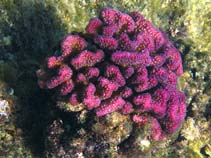
Colonies irregularly branching (ramose), less than 30 cm in diameter, covered with verrucae; corallites plocoid, about 0.1 cm across, found both on verrucae and in between. Stout branches usually more than 1 cm in diameter, but varies with exposure to water movement and depth. Colonies growing in shallow water or exposed to wave action tend to have thick sturdy branches while those from deep calm waters tend to have thinner branches. Color is mottled light brown in life and skeleton usually has reddish brown patches after cleaning (Ref. 269).
Maximum depth from Ref. 98471. It is found from fore-reefs (Ref. 87903) to protected fringing reefs and coral communities living on rocky substrates (Ref. 98471). Colonies growing in shallow water or exposed to wave action have thick sturdy branches while those from deep calm waters have thinner branches (Ref. 269).
Siklus hidup dan perilaku kawin
Kematangan | Reproduksi, perkembang biakan | Pemijahan | telur-telur | Fekunditas | Larva
Hermaphroditic (Ref. 113708). Mature gametes are shed into the coelenteron and spawned through the mouth. Life cycle: The zygote develops into a planktonic planula larva. Metamorphosis begins with early morphogenesis of tentacles, septa and pharynx before larval settlement on the aboral end (Ref. 833).
rujukan utama
Acuan | Koordinator | mitra
Hodgson, G. 1998 Corals. p. 101-122. In Carpenter, K.E. and V.H. Niem (eds) FAO species identifidication guide for fishery purposes. The living marine resources of the Western Central Pacific. Vol. 1. Seaweeds, coral, bivalves and gastropods. FAO Rome. (Acuan 269)
Status IUCN Red List
(Acuan 130435: Version 2025-2 (Global))
status CITES (Acuan 108899)
Not Evaluated
ancaman kepada manusia
penggunaan manusia
FAO - Publication: search | FishSource |
Alat, peralatan
informasi lanjut
Ekologi trofikItem makanan (mangsa)Komposisi makananKonsumsi makananPemangsa FisiologiKonsumsi oksigen
Yang berhubungan dengan manusiaPerangko, koin, dll.
Sumber internet
Estimasi berdasarkan model
Kerentanan Penangkapan Ikan
(Acuan 71543) |
Low vulnerability (20 of 100). |
kategori harga
(Acuan 80766): |
Unknown. |