Octocorallia |
Malacalcyonacea |
Tubiporidae
Ambiente: milieu / zona climática / intervalo de profundidade / gama de distribuição
Ecologia
Associadas(os) a recifes; intervalo de profundidade 3 - 15 m (Ref. 8294). Tropical; 27°C - 28°C (Ref. 130889)
Indo-West Pacific: West to Red Sea; north to Japan, east to Vanuatu; south to Australia.
Comprimento na primeira maturidade / Tamanho / Peso / Idade
Maturidade: Lm ? range ? - ? cm Max length : 50.0 cm COLD macho/indeterminado; (Ref. 269)
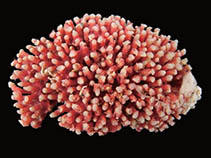
Colonies form mounds up to 50 cm in diameter that may dominate large patches of reef. The colonies are composed of thin tubes (the "organ pipes"), 0.2 cm diameter in length, cemented together by horizontal plates at intervals of several centimeters. In life, the corals have white polyps that may cover the corallum. The skeleton is deep red (Ref. 269).
Maximum depth from Ref. 123855. Abundant in mid-shelf reefs, becomes prolific at a depth of 20 m. Less common in muddy coastal areas (Ref. 101098). Common from the reef flat to intermediate depths (Ref. 296).
Ciclo de vida e comportamento de acasalamento
Maturidade | Reprodução | Desova | Ovos | Fecundidade | Larvas
Members of the class Anthozoa are either gonochoric or hermaphroditic. Mature gametes are shed into the coelenteron and spawned through the mouth. Life cycle: The zygote develops into a planktonic planula larva. Metamorphosis begins with early morphogenesis of tentacles, septa and pharynx before larval settlement on the aboral end.
Ross, M.A. and G. Hodgson 1981 A quantitative study of hermatypic coral diversity and zonation at Apo Reef, Mindiro, Philippines. Proceedings of the Fourth International Coral Reef Syposium, Manila 2:281-291. (Ref. 8294)
Categoria na Lista Vermelha da IUCN
(Ref. 130435: Version 2025-2 (Global))
Categoria CITES (Ref. 108899)
Not Evaluated
Ameaça para o homem
Utilização humana
Pescarias: de interesse potencial
FAO - Publication: search | FishSource | Sea Around Us
Ferramentas
Mais informação
Ecologia TróficaProdutos alimentares (presas)
Composição da dieta
Consumo alimentar
Predadores
Dinâmica das populaçõesCrescimentoIdades / tamanhos máximosComprimento-peso rel.Comprimento-comprimento rel.Frequência de comprimentoConversão de massaAbundância Ciclo de vidaReproduçãoMaturidadeFecundidadeDesovaOvosDesenvolvimento dos ovosLarvas FisiologiaConsumo de oxigénio
Relacionado com o ser humanoSelos, moedas, diversos.
Fontes da internet
Estimativas baseadas em modelos
Vulnerabilidade da pesca
(Ref. 71543) |
Moderate vulnerability (40 of 100). |
Categoria de preço
(Ref. 80766): |
Unknown. |